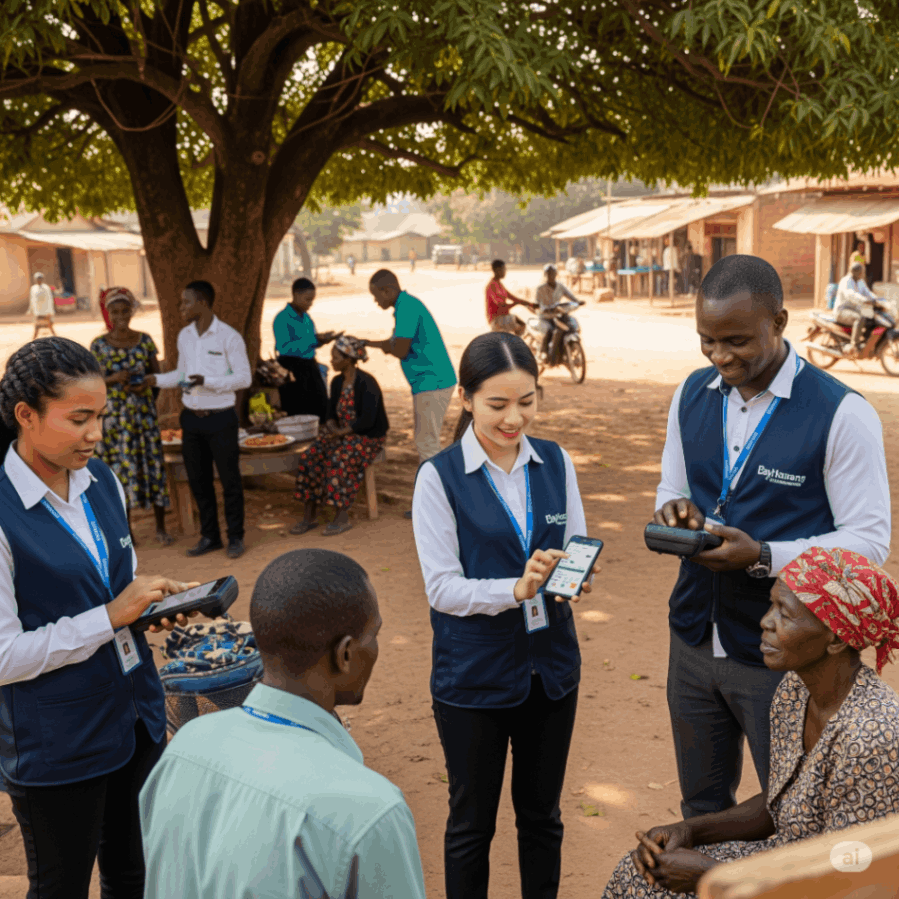
In recent years, Pakistan’s financial ecosystem has undergone significant transformation. One of the most impactful developments is the rise of rural fintech agents, serving as an accessible and human face of microbanking for the underserved. These agents are more than just service providers—they’re financial bridges between rural populations and digital banking solutions, unlocking a wave of opportunity and inclusion
The Need for Rural Fintech Agents
According to the World Bank, about 100 million Pakistanis remain unbanked, many of whom reside in rural regions. These areas suffer from:
- Limited access to physical bank branches
- Low financial literacy rates
- Cultural and gender barriers
- Poor digital infrastructure
Rural fintech agents offer localized solutions that address these pain points. They are enabling an ecosystem where digital wallets, micro-loans, remittances, and bill payments are just a few taps away—even for those without smartphones.
What Are Fintech Agents?
Fintech agents are local individuals or businesses authorized by fintech platforms to provide banking services. Often operating through:
- Mobile applications
- Point-of-sale (POS) devices
- Biometric verification systems
They typically assist users with:
- Opening accounts
- Depositing or withdrawing cash
- Sending/receiving remittances
- Paying utility bills
- Microloans or saving plans
Role in Microbanking
Microbanking in rural Pakistan traditionally depended on NGOs and MFIs (Microfinance Institutions). Fintech agents now digitize and scale this model.
Key Microbanking Services Offered:
- Digital Savings: Encouraging daily savings via mobile apps.
- Microloans: Small-ticket loans with fast approval processes.
- Micro-insurance: Health or crop-related insurance for farmers.
- Mobile Wallets: Reducing the dependency on cash transactions.
These services have lowered entry barriers for the financially excluded and made financial services more human and localized.
Key Players Driving Fintech in Rural Pakistan
Several companies and institutions are actively building agent networks across Pakistan:
| Organization | Role in Rural Fintech | Reach (as of 2025) |
|---|---|---|
| Easypaisa (Telenor Microfinance Bank) | Largest agent network; offers full mobile banking suite | 200,000+ agents |
| JazzCash (Mobilink Microfinance Bank) | Focus on digital wallets and remittance services | 180,000+ agents |
| UPaisa (U Microfinance Bank) | Strong rural presence via branchless banking | 60,000+ agents |
| Finja | Digital salary loans and SME-focused services | Urban + semi-rural |
| Rural Support Programs (RSPN, NRSP) | Partner with fintechs for outreach and education | Nationwide |
Explore how QR code payments are transforming rural Pakistan
Benefits for Rural Communities
1. Financial Inclusion
Fintech agents make banking accessible to women, farmers, and small traders groups previously neglected by traditional banks.
2. Employment Opportunities
The agent model creates micro-entrepreneurial roles for locals, providing them with a steady income.
3. Security
Cashless transactions reduce the risks of theft and fraud in rural settings.
4. Convenience
Agents offer doorstep services, especially valuable in areas lacking infrastructure.
Challenges in Implementation
Despite the growth, there are hurdles:
- Trust Issues: Many rural users still prefer cash and fear scams.
- Digital Literacy: Low familiarity with smartphones and apps.
- Connectivity Gaps: Inconsistent mobile networks in remote areas.
- Agent Liquidity: Agents may face cash shortages, limiting transactions.
Government and Regulatory Support
The State Bank of Pakistan (SBP) plays a proactive role in driving branchless banking:
- Raast: The national instant payment system facilitates real-time transfers, even for the unbanked.
- Asaan Mobile Account (AMA): Allows account opening via USSD codes, no smartphone needed.
- Licensing Frameworks: Supports fintechs in deploying agent-based models responsibly.
Comparison Table
Traditional Microbanking vs. Agent-Based Microbanking
| Feature | Traditional Microbanking | Fintech Agent-Based Microbanking |
| Access to Branches | Limited | Widespread via local agents |
| Cost of Operations | High | Low |
| Speed of Service | Slow | Instant (real-time transactions) |
| Technology Use | Minimal | High (Mobile apps, POS devices) |
| Inclusion of Marginalized Groups | Limited | Significant |
Case Study: JazzCash and Easypaisa Agent Networks
JazzCash:
- Expanded aggressively in Punjab and KPK.
- Enabled over 40 million wallet accounts.
- Partnerships with agri-fintechs to reach farmers.
Easypaisa:
- Women-friendly agent models in Sindh and South Punjab.
- Introduced voice-based USSD services for illiterate users.
- Microloan feature for rickshaw drivers and small vendors.
Future Outlook
By 2030, it’s expected that over 80% of Pakistan’s adult population will be financially included, thanks in large part to fintech agents. Trends include:
- AI-based credit scoring for microloans
- Blockchain for transparency in transactions
- Voice-activated banking for illiterate users
- Stronger integration between fintechs, telecoms, and government databases
FAQs
What is a fintech agent?
A fintech agent is a local representative authorized to perform financial services such as deposits, withdrawals, loan processing, and mobile wallet services.
How are rural fintech agents different from bank branches?
Unlike formal branches, fintech agents operate independently in local shops or homes using digital tools, making them more flexible and accessible.
Can fintech agents issue loans?
Yes, many agents facilitate microloans via fintech apps, often using digital credit scoring tools.
Is it safe to use fintech agents?
Yes, most agents are registered with licensed banks or fintechs and use secure systems like biometric verification and OTPs.
Conclusion
The evolution of rural fintech agents is not just a technological revolution it’s a social transformation. By combining human presence with digital convenience, Pakistan is rewriting the narrative of microfinance. Empowering rural communities through fintech agents is proving to be the cornerstone of true financial inclusion.
Stay updated with more fintech trends at Fintech Zoomiom.