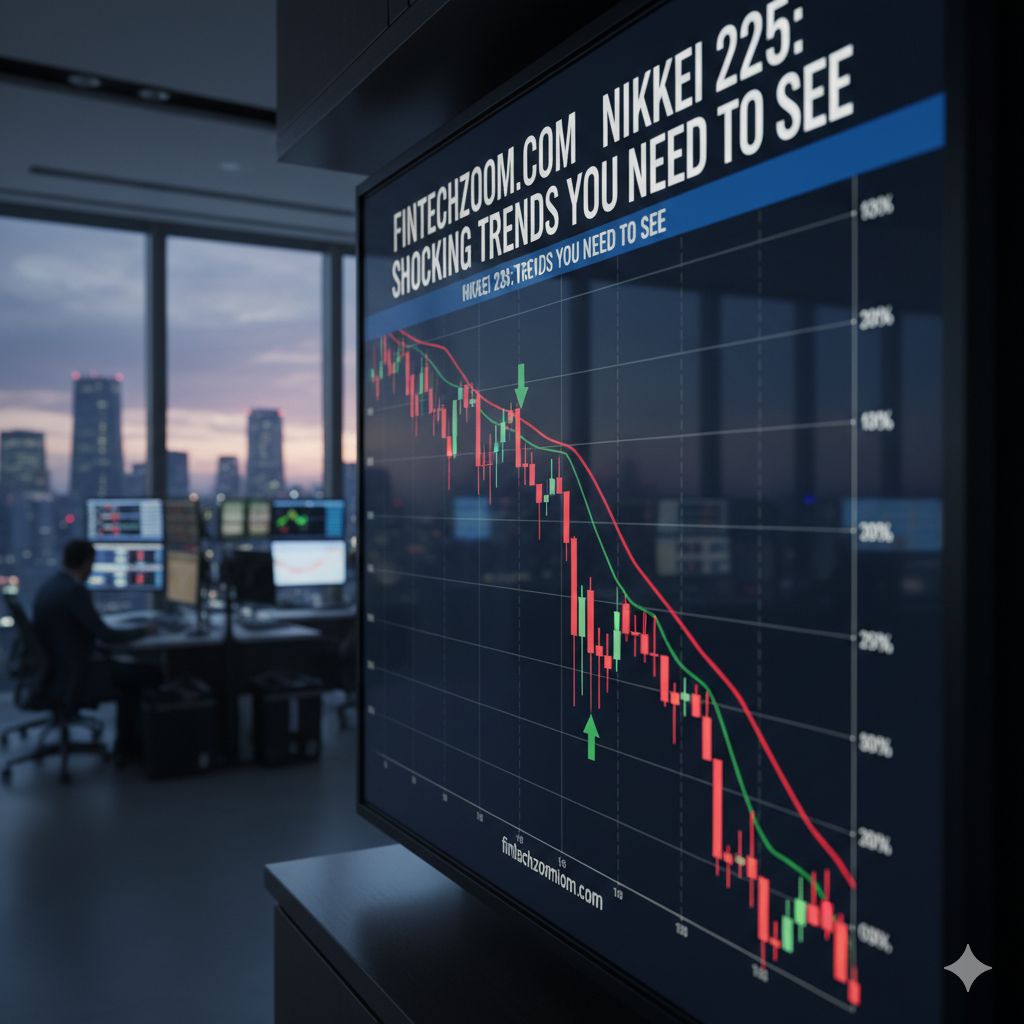
The Japanese stock market has always been a fascinating arena for investors worldwide, and the Nikkei 225 index stands as its most prominent benchmark. When combined with modern financial technology platforms, tracking this market becomes easier. The fintechzoom.com Nikkei 225 coverage provides investors with real-time data and analysis that helps them make informed decisions about Japanese equities.
Understanding how this index works and what drives its movements can open doors to significant investment opportunities. Whether you’re a seasoned trader or just starting your journey in international markets, grasping the fundamentals of Japan’s premier stock index is essential for building a diversified portfolio.
What Is the Nikkei 225 Index?
The Nikkei 225 represents the top 225 publicly traded companies on the Tokyo Stock Exchange. Often called Japan’s version of the Dow Jones Industrial Average, this price-weighted index includes household names like Toyota, Sony, and SoftBank. It was first calculated in 1950 and has since become the most widely quoted measure of Japanese stock market performance.
Unlike market-cap weighted indices, the Nikkei 225 has more influence on companies with higher share prices. This unique calculation method means that a company with expensive shares can impact the index more than a larger company with cheaper shares. Major sectors include technology, automotive manufacturing, financial services, and consumer goods. The fintechzoom.com Nikkei 225 section offers detailed breakdowns of sector performance, helping investors identify which industries are driving market movements.
Over the years, the index underwent a significant overhaul in its calculation methodology to better reflect the modern Japanese economy. Today, it serves as a crucial barometer for economic health in Japan and across Asia.
How FintechZoom Tracks Japanese Markets
Financial technology has revolutionised how we access market information, and platforms like FintechZoom have become indispensable tools for modern investors. The platform provides comprehensive coverage of global markets with specialised sections dedicated to major indices. Through the fintechzoom.com Nikkei 225 portal, users can access live price updates, historical charts, and expert commentary on market movements.
What sets these platforms apart is their ability to aggregate data from multiple sources and present it in an easily digestible format. Real-time alerts notify users of significant price movements, while analytical tools help identify patterns and trends. The platform also offers comparison features that allow investors to see how the Nikkei 225 performs relative to other major global indices like the S&P 500 or FTSE 100.
Educational resources available through these platforms help demystify complex market concepts. From beginner guides to advanced trading strategies, investors at every level can find valuable information to enhance their understanding of Japanese markets.
Recent Performance and Market Trends
The past few years have brought remarkable volatility to Japanese markets. The Nikkei 225 has experienced significant swings driven by various economic factors, including currency fluctuations, monetary policy changes, and global trade dynamics. The index has shown resilience throughout 2024 and 202e despite global economic challenges.
A notable trend has been the influence of the weakening yen on export-heavy companies. When the Japanese currency depreciates against the dollar, companies that sell products overseas see their profits increase when converted back to yen. This dynamic has benefited major exporters like automotive and electronics manufacturers. According to the U.S. Securities and Exchange Commission, understanding currency impacts is crucial for international investing.
Technology stocks have also played a pivotal role in recent market movements. Japanese semiconductor companies have benefited from the global chip shortage and increasing demand for artificial intelligence components. The fintechzoom.com nikkei 225 analysis frequently highlights these sector-specific trends, helping investors spot opportunities.
Key Companies Driving the Index
Several heavyweight corporations significantly impact the Nikkei 225’s daily movements. Tokyo Electron, a leading semiconductor equipment manufacturer, has seen its stock price soar amid the global tech boom. Similarly, Fast Retailing, the parent company of Uniqlo, represents the retail sector’s strength with its international expansion strategy.
Toyota Motor Corporation remains a dominant force within the index. As the world’s largest automaker by production volume, its performance reflects domestic economic conditions and global automotive demand. The company’s push into electric vehicles and hybrid technology has kept it competitive in an evolving market.
Financial institutions like Mitsubishi UFJ Financial Group and Sumitomo Mitsui Financial Group represent the banking sector’s influence. These companies benefit from interest rate policies set by the Bank of Japan and play crucial roles in corporate lending and investment banking activities.
Here are the most influential sectors in the Nikkei 225:
- Technology and Electronics: Companies producing semiconductors, consumer electronics, and industrial equipment
- Automotive Manufacturing: Major car makers and their suppliers are driving export revenues
- Financial Services: Banks, insurance companies, and securities firms managing capital flows
- Consumer Goods: Retail chains and product manufacturers serving domestic and international markets
- Pharmaceuticals: Healthcare companies developing innovative treatments and medical devices
Understanding Market Volatility Factors
Multiple factors contribute to the daily fluctuations seen in the Nikkei 225. Currency exchange rates play an outsized role because many listed companies derive substantial revenue from overseas operations. When the yen strengthens, it can hurt exporters by making their products more expensive in foreign markets. Conversely, a weaker yen typically boosts these companies’ earnings.
Monetary policy decisions by the Bank of Japan significantly impact investor sentiment. The central bank’s stance on interest rates and bond-buying programs affects everything from corporate borrowing costs to consumer spending patterns. Changes in these policies can trigger substantial market reactions within hours.
Global economic conditions also matter tremendously. Since Japan is deeply integrated into international supply chains, disruptions in other major economies quickly ripple through Japanese markets. Trade tensions, commodity price changes, and geopolitical events contribute to market volatility. The fintechzoom.com Nikkei 225 platform provides real-time updates on these factors, helping investors stay informed.
Comparing Nikkei 225 with Global Indices
Understanding how the Nikkei 225 compares to other major stock indices provides valuable context for investment decisions. Each index reflects different economic conditions, market structures, and investment opportunities.
| Index | Number of Companies | Weighting Method | Primary Sectors |
|---|---|---|---|
| Nikkei 225 | 225 | Price-weighted | Technology, Automotive, Finance |
| S&P 500 | 500 | Market-cap weighted | Technology, Healthcare, Finance |
| FTSE 100 | 100 | Market-cap weighted | Finance, Energy, Consumer Goods |
| DAX | 40 | Market-cap weighted | Automotive, Chemicals, Finance |
The Nikkei 225’s price-weighted methodology makes it unique among major indices. This means that stock splits and share price changes can have disproportionate effects on the index value. Investors using the fintechzoom.com Nikkei 225 resources should understand this distinction when making comparisons.
Performance correlations between indices vary depending on market conditions. Most major indices tend to move in similar directions during global economic expansions. However, regional factors can cause significant divergence during periods of uncertainty.
Investment Strategies for Japanese Stocks
Approaching Japanese equity markets requires careful consideration of various factors. Currency hedging often becomes necessary for international investors since exchange rate movements can significantly impact returns. Some investors choose currency-hedged funds to eliminate this variable, while others view currency exposure as an additional opportunity.
Sector rotation strategies work particularly well in the Japanese market due to its diverse industrial base. Moving capital between technology, financials, and consumer goods based on economic cycles can enhance returns. The cyclical nature of automotive and industrial companies means they often outperform during economic recoveries.
Long-term investors often favour Japanese blue-chip companies with strong balance sheets and consistent dividend payments. These stable corporations provide steady returns while offering exposure to Asian economic growth. Research from the Federal Reserve emphasises the importance of diversification across geographic regions.
Technology’s Impact on Market Access
Financial technology has democratized access to international markets in unprecedented ways. Retail investors can now trade Japanese stocks from anywhere in the world with a smartphone and an internet connection. This accessibility has increased market participation and liquidity across global exchanges.
Advanced charting tools and technical analysis features help investors identify entry and exit points. Machine learning algorithms can spot patterns in historical data that human analysts might miss. The fintechzoom.com Nikkei 225 platform integrates these technologies to provide users with sophisticated analytical capabilities.
Mobile trading apps have made it possible to monitor positions and execute trades in real time. Push notifications alert investors to essential price movements or breaking news that could affect their holdings. This constant connectivity allows for more responsive portfolio management.
Economic Indicators Affecting Japanese Markets
Several key economic metrics provide insights into future Nikkei 225 movements. Gross domestic product growth rates indicate the overall health of the Japanese economy and influence corporate earnings expectations. Strong GDP growth typically supports stock prices as companies generate higher revenues.
Industrial production figures offer early signals about the health of the manufacturing sector. Since many Nikkei 225 companies operate in manufacturing, these reports directly impact investor sentiment. Rising production generally suggests improving economic conditions and higher corporate profits.
Consumer confidence surveys reveal household spending intentions, which drive demand for goods and services. Higher confidence levels often precede increases in consumption, benefiting retail and consumer goods companies. Trade balance data shows whether Japan exports more than imports, affecting currency values and export-oriented stocks.
Risk Management in International Investing
Managing risk becomes paramount when investing in foreign markets. Political instability, regulatory changes, and economic policy shifts can all impact investment returns. Diversifying across multiple countries and asset classes helps mitigate these risks.
Understanding tax implications is essential for international investors. Countries have varying rules about capital gains, dividends, and withholding taxes. Consulting with tax professionals who understand cross-border investing can prevent costly mistakes—resources at Investor.gov guide international investment considerations.
Position sizing prevents any single investment from dominating your portfolio. Even with high conviction, limiting individual positions to a reasonable percentage of total assets protects against unexpected downturns. The fintechzoom.com Nikkei 225 analysis can help identify diversification opportunities within Japanese markets.
Stop-loss orders provide automatic downside protection by triggering sales when prices fall to predetermined levels. While these tools don’t guarantee perfect execution, they enforce discipline during volatile periods.
Future Outlook for Japanese Equities
Looking ahead, several trends appear likely to shape the Nikkei 225’s trajectory. Japan’s aging population presents both challenges and opportunities. Healthcare and pharmaceutical companies stand to benefit from increasing demand for medical services and products. Automation and robotics companies may also grow as businesses seek to offset labour shortages.
The country’s commitment to renewable energy and sustainability initiatives could boost related sectors. Companies involved in solar power, wind energy, and battery technology may experience significant growth as Japan works toward its carbon neutrality goals.
Corporate governance reforms have encouraged companies to improve shareholder returns through higher dividends and share buybacks. These changes make Japanese stocks more attractive to international investors who previously viewed them as underperforming. According to experts at fintechzoomiom, these structural changes could support long-term market appreciation.
How to Start Investing in the Nikkei 225
Several pathways exist for gaining exposure to Japanese markets. Exchange-traded funds offer diversified exposure to the Nikkei 225 with a single transaction. These funds track the index and provide liquidity similar to individual stocks. They represent a cost-effective way for smaller investors to participate in Japanese market movements.
Individual stock selection allows for more targeted investments but requires greater research and monitoring. Investors who are comfortable with analysing financial statements and industry trends can build custom portfolios of Japanese companies. The fintechzoom.com Nikkei 225 platform provides the data and tools needed for this approach.
Mutual funds managed by professionals with expertise in Asian markets offer another option. These funds employ analysts who understand local business practices and economic conditions. While management fees reduce returns, the expertise provided can be valuable for investors new to Japanese markets.
Key Features of Quality Market Analysis Platforms
When evaluating platforms for tracking Japanese markets, several features deserve consideration. Real-time data feeds ensure you decide based on current information rather than delayed quotes. Even minor delays can matter during periods of high volatility.
Comprehensive charting capabilities allow investors to conduct technical analysis using various indicators and timeframes. The ability to compare multiple securities simultaneously helps identify relative strengths and weaknesses across sectors.
Educational resources demonstrate a platform’s commitment to investor success. Video tutorials, written guides, and webinars help users maximise the platform’s capabilities. Quality analysis goes beyond the raw data platform’s video context and interpretation.
These essential features should guide your platform selection:
- Live price updates with minimal delay
- Historical data spanning multiple years
- Customizable alerts for price movements and news
- Mobile accessibility for on-the-go monitoring
- Integration with brokerage accounts for seamless trading
Conclusion
The Japanese stock market offers compelling opportunities for investors willing to understand its unique characteristics. The Nikkei 225 is an excellent gateway to these opportunities, representing the country’s most influential corporations across diverse sectors. Country’s financial technology platforms have made tracking and analysing this market more accessible.
Through comprehensive resources like those available on fintechzoom.com, Nikkei 225 investors can stay informed about market trends, company developments, and economic factors affecting Japanese equities. Whether you’re seeking growth through technology stocks, stability from established manufacturers, or income through dividend-paying blue chips, the Nikkei 225 provides numerous options.
International investing requires ongoing education, careful risk management, and patience. By leveraging quality analytical tools and maintaining a long-term perspective, investors can potentially benefit from Japan’s economic dynamism and corporate innovation. The trends mentioned throughout this article demonstrate that staying informed and adaptable remains crucial in today’s rapidly evolving financial markets.
Frequently Asked Questions
What makes the Nikkei 225 different from other stock indices?
The Nikkei 225 uses a price-weighted calculation method rather than market capitalisation weighting. This means companies with higher share prices have greater influence on the index, regardless of their total market value. This methodology makes it similar to the Dow Jones Industrial Average.
How does currency exchange affect Nikkei 225 returns for U.S. investors?
Currency fluctuations between the yen and the dollar can significantly impact returns. A strengthening dollar against the yen can reduce gains or amplify losses for U.S. investors, while a weakening dollar has the opposite effect. Many investors use currency-hedged funds to eliminate this variable.
Can individual investors buy Nikkei 225 stocks directly?
Individual investors can purchase stocks of companies listed in the Nikkei 225 through international brokerage accounts. Alternatively, ETFs and mutual funds provide simpler access to diversified exposure across the entire index.
What time does the Tokyo Stock Exchange operate?
The Tokyo Stock Exchange operates from 9:00 AM to 3:00 PM Japan Standard Time, with a lunch break from 11:30 AM to 12:30 PM. This timing means U.S. investors often monitor positions during evening hours due to the time difference.
How often does the Nikkei 225 composition change?
The Nikkei 225 undergoes periodic reviews to ensure it reflects the current Japanese economy. Component changes occur when necessary to replace companies that no longer meet listing requirements or to include more representative firms.