Introduction
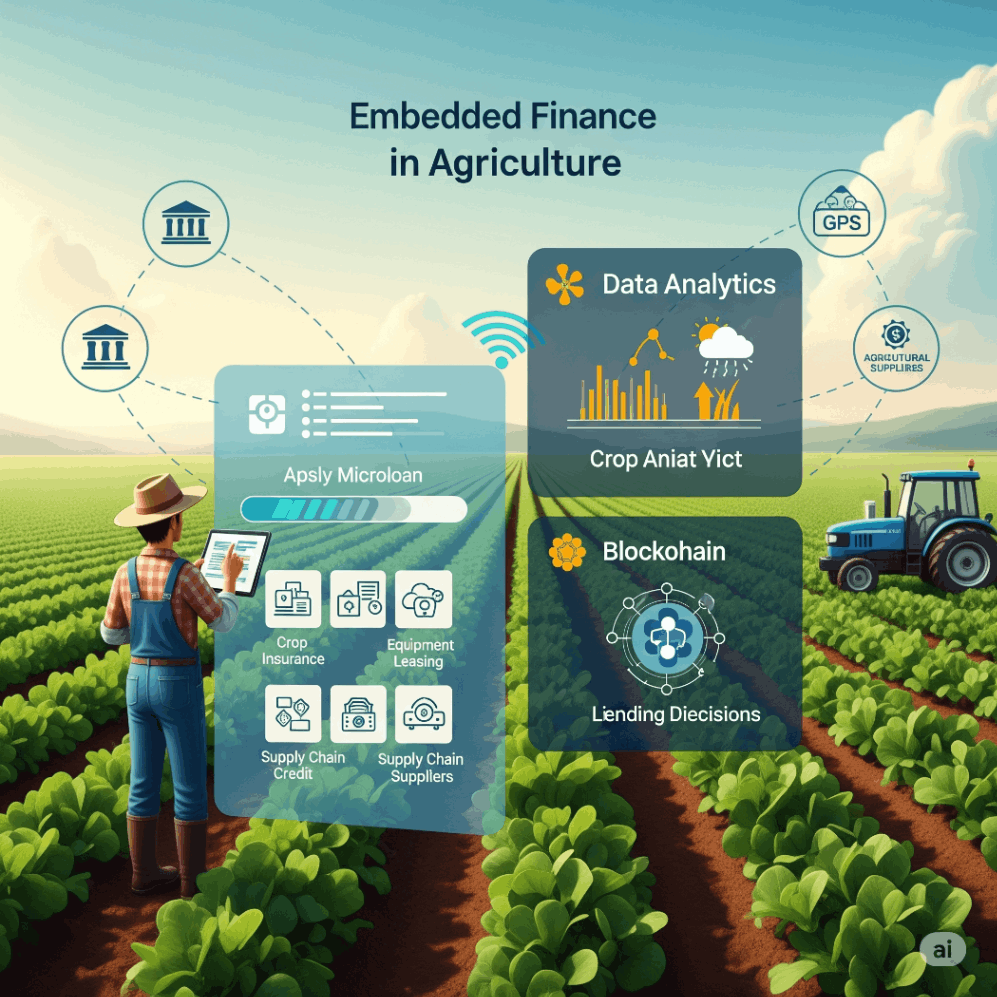
Agriculture remains the backbone of many emerging economies, especially in countries like Pakistan, India, and regions across Sub-Saharan Africa. Yet, farmers remain underserved by formal financial systems. Embedded finance a financial revolution within non-financial platforms has the potential to close this gap. It can empower farmers, improve yields, and contribute to national economic growth.
At FintechZoomiom, we believe this hidden opportunity deserves attention.
What Is Embedded Finance?
Embedded finance refers to the integration of financial services into non-financial platforms. Instead of going to a bank, users can:
-
Get loans via ecommerce platforms.
-
Make payments directly inside a farming app.
-
Use insurance tools integrated into supply chain platforms.
According to McKinsey, embedded finance is expected to generate over $230 billion in revenues by 2025.
The Current State of Agriculture in Emerging Markets
Let’s take a quick look at the agriculture sector in emerging economies:
| Metric | Pakistan | Sub-Saharan Africa | India |
|---|---|---|---|
| % of labor force in agri | 38% | 54% | 44% |
| Access to formal credit | <20% | ~10% | ~30% |
| Use of digital tools | <10% in rural areas | Limited but growing | 20%+ and increasing |
Despite its importance, agriculture is plagued by:
-
Lack of credit access
-
Market volatility
-
Poor financial literacy
-
Limited insurance coverage
How Embedded Finance Is Transforming Agriculture
1. Digital Lending Through Agri-Platforms
Farmers can now apply for microloans through agri marketplaces. These platforms assess alternative data like crop yields or purchase history to offer credit.
2. Integrated Payment Systems
Embedded wallets allow buyers and sellers to transact seamlessly, often using mobile money or QR code payments. (See our related article: How QR Code Payments Are Transforming Rural Pakistan)
3. Weather-Based Crop Insurance
Platforms integrate with weather data APIs to trigger automatic insurance payouts.
4. Buy Now, Pay Later (BNPL) for Inputs
Farmers can purchase seeds and fertilizers with deferred payments embedded in ecommerce platforms.
Benefits of Embedded Finance in Agriculture
It Farmers:
-
Access to credit without collateral
-
Transparent loan terms
-
Faster disbursements
-
Custom insurance offerings
For Financial Institutions:
-
Lower customer acquisition costs
-
Access to alternative data for underwriting
-
Better repayment rates via automated systems
For Agri-Tech Startups:
-
Higher customer retention
-
Diversified revenue streams
-
Better engagement with rural users
Challenges and Risks
Despite its promise, embedded finance comes with some hurdles:
| Challenge | Description |
|---|---|
| Data Privacy | Sensitive farmer data needs protection. |
| Digital Literacy | Many farmers lack the skills to use these platforms. |
| Infrastructure Gaps | Poor internet access in remote regions hinders adoption. |
| Trust Issues | Farmers may distrust digital-only financial models. |
| Regulatory Compliance | Many regions lack clear fintech and agri-finance regulations. |
1. DigiFarm (Kenya)
A platform offering loans, insurance, and market access. Partnered with Safaricom for embedded financial services.
2. TaroWorks + Grameen Foundation
Digitizes last-mile operations for agriculture NGOs, enabling financial inclusion.
3. Ricult (Pakistan/Thailand)
Provides AI-based crop analytics and embedded microfinance for rural farmers.
4. DeHaat (India)
Offers inputs, advisory, and embedded financial products via its app.
Future Potential and Growth
The agri-embedded finance market is still young, but its potential is enormous:
-
Increased smartphone penetration: Over 70% in rural Pakistan by 2027.
-
AI and IoT integration: Enhances credit scoring and risk management.
-
Government incentives: Subsidies and programs now favor digital inclusion.
Projected Growth (2025–2030)
| Area | CAGR (%) | Key Driver |
|---|---|---|
| Agri-credit via fintech | 18% | Smartphone + data-driven models |
| Agri-insurance adoption | 22% | Climate change risk |
| BNPL for inputs | 25% | Rise of rural ecommerce |
How FintechZoomiom Supports Agri-Fintech Innovation
At FintechZoomiom, we actively spotlight innovations in agri-fintech, rural payments, and digital inclusion. We publish:
-
In-depth guides on fintech adoption
-
Use case studies from Pakistan and beyond
-
Research-backed SEO content to promote awareness
Explore other helpful articles like:
FAQs
Q1: Is embedded finance secure for rural users?
Yes, when implemented with strong encryption, data policies, and two-factor authentication.
Q2: Can farmers access these services without smartphones?
Some services work via USSD codes or SMS, but full functionality often requires smartphones.
Q3: How do fintechs assess farmers without formal credit history?
They use alternative data such as mobile usage, purchase history, satellite imagery, and yield records.
Q4: Is embedded finance regulated in Pakistan?
While fintech regulations exist, embedded finance is still in a gray area. Authorities like SBP are working to formalize it.
Q5: What is the role of telcos in agri-fintech?
Telecom companies are key enablers, offering payment rails, customer data, and rural reach.
Conclusion
Embedded finance in agriculture is more than just a trend—it’s a transformative opportunity for economic empowerment. By bridging the gap between finance and farming, it equips rural communities with tools to grow, invest, and thrive.
As this sector evolves, platforms like FintechZoomiom are here to educate, inform, and support this powerful shift.
Stay updated with the latest in fintech and agriculture by visiting FintechZoomiom.com
If you’d like a version of this article for LinkedIn or as a downloadable PDF whitepaper, just let me know.
Would you like the next article to focus on Agri-Blockchain Use Cases in South Asia or BNPL for Fertilizer & Seed Suppliers”?