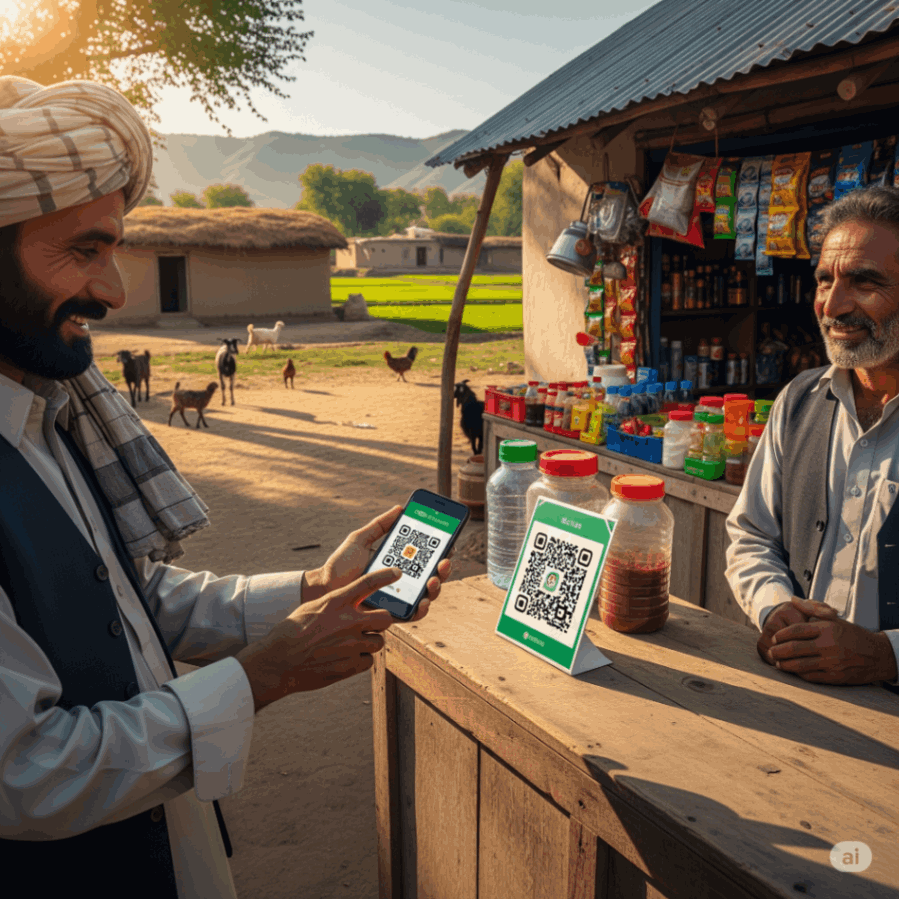
The digital revolution in Pakistan is no longer confined to urban centers. With the rise of QR code payments, a silent transformation is underway in rural regions. In areas once dominated by cash-based transactions and limited banking infrastructure, QR codes are making financial inclusion not just a policy goal, but a reality.
This article dives deep into how QR code payments are reshaping rural Pakistan’s economic landscape offering access, transparency, and empowerment to millions.
Introduction
According to a World Bank Report, over 100 million people in Pakistan remain outside the formal banking system. Most of them reside in rural areas, where traditional banking is either unavailable or underutilized.
But things are changing.
Thanks to QR code-based mobile payment systems, even a small vendor in a remote village can now accept digital payments, securely and instantly.
What Are QR Code Payments?
QR (Quick Response) codes are 2D barcodes that store data and can be scanned by smartphones or POS devices. In the context of payments:
- A merchant displays a QR code.
- A customer scans it using a digital wallet or banking app.
- The amount is transferred instantly from the customer’s account to the merchant’s.
QR payments require minimal infrastructure just a smartphone with internet access and a digital wallet.
Popular QR payment platforms in Pakistan:
- Easypaisa
- JazzCash
- SadaPay
- Raast (State Bank’s Instant Payment System)
Challenges of Financial Inclusion in Rural Pakistan
Before QR payments began gaining traction, rural Pakistan faced multiple barriers to digital finance:
| Challenge | Description |
|---|---|
| Lack of Bank Branches | Many villages have no physical banking presence. |
| Low Literacy Rates | Digital tools require some basic understanding. |
| Cash-Dominated Economy | Most transactions were conducted in cash. |
| Lack of Trust in Digital Systems | Rural populations are cautious about online fraud. |
| Mobile Network Limitations | Many areas lack stable 3G/4G connectivity. |
The Role of Fintech in Enabling QR Code Payments
Fintech companies in Pakistan are addressing these barriers head-on:
Mobile Wallets
- Easypaisa and JazzCash offer USSD-based services that don’t require smartphones.
QR Code Accessibility
- Merchants receive free QR stickers.
- Apps like SadaPay and NayaPay automatically generate merchant QR codes.
Seamless Onboarding
- No need to visit a branch — rural merchants can register online or via agents.
Multilingual Support
- Fintech apps are now available in Urdu and regional languages.
Impact of QR Code Payments in Rural Areas
The benefits of QR code payments in rural Pakistan are becoming increasingly evident.
Financial Inclusion
- Rural shopkeepers and farmers can access formal financial systems.
Women Empowerment
- Home-based businesses run by women now receive direct payments, reducing dependency.
Tax Compliance
- Digitized records help bring more people into the tax net, aiding national growth.
Economic Resilience
- Faster transactions improve cash flow and reduce theft risks.
COVID-19 Response
- QR codes enabled contactless payments during lockdowns, ensuring continuity of trade.
Case Studies & Real-Life Examples
1. Village Grocery Store in Chakwal
Gul Bibi runs a small store and uses JazzCash QR codes to receive payments. Sales have increased because customers now find it easier to pay digitally.
2. Local Farmer in Bahawalpur
Using Easypaisa, a cotton farmer receives payments directly from buyers, reducing the need for middlemen.
3. Women Entrepreneurs in Swat
With support from local NGOs, women-led businesses in Swat have adopted QR payments to sell embroidered goods on social platforms.
Table: Key Benefits of QR Payments
| Benefit | Description |
| Low Cost | No POS machine required |
| Ease of Use | Just scan and pay |
| Secure Transactions | Encrypted & traceable |
| Paperless & Instant | No receipts or wait |
| Promotes Transparency | All transactions are recorded |
Government & Private Sector Initiatives
SBP’s Raast Program
The State Bank of Pakistan’s Raast system is promoting interoperable, instant QR payments across banking platforms. More on Raast here
Telecom-Backed Wallets
- Easypaisa (by Telenor Microfinance Bank)
- JazzCash (by Mobilink Microfinance Bank)
Both offer QR integration to their millions of mobile users.
Startup Innovation
New players like SadaPay, NayaPay, and TAG are focusing on the unbanked population with user-friendly apps.
NGO & Donor Projects
Several NGOs, with support from international donors like USAID, are facilitating QR payment adoption among rural SMEs and women-led businesses.
Frequently Asked Questions (FAQ)
1. Do rural merchants need a smartphone for QR payments?
Not necessarily. Platforms like Easypaisa offer USSD-based solutions that work on feature phones.
2. Is internet access required for QR code scanning?
Yes, in most cases, at least 2G/3G connectivity is needed for QR payments via apps.
3. Are QR payments safe?
Yes, they are encrypted and reduce the need to carry cash, making them safer than physical currency.
4. Can QR codes be used for business records or taxes?
Absolutely. They provide a transparent transaction history, aiding in record-keeping and tax filing.
5. How can a rural business get a QR code?
Merchants can apply via apps like JazzCash, Easypaisa, or Raast partner banks, often receiving a QR code within minutes.
Conclusion
QR code payments are redefining rural commerce in Pakistan, providing an accessible gateway to digital finance. By eliminating physical and systemic barriers, they are making it possible for millions to enter the formal economy — fostering growth, trust, and innovation.
The journey is just beginning, but the impact is already visible. As infrastructure improves and trust grows, QR codes may very well become the backbone of rural financial inclusion.