Introduction: Bridging Blockchain and the Planet
The rise of Regenerative Finance (ReFi) marks a turning point in how blockchain technology interacts with the real economy. Unlike traditional DeFi (Decentralized Finance), which focuses on financial yield and liquidity, ReFi introduces a planet-positive framework that seeks to restore ecosystems, reduce carbon emissions, and fund sustainability projects all through tokenized economic models.
As the world faces the twin crises of climate change and resource depletion, ReFi projects are merging Web3 innovation with environmental regeneration, giving investors a new way to make both profit and positive impact.
What is ReFi (Regenerative Finance)?
ReFi, short for Regenerative Finance, is an emerging blockchain movement that redirects capital flows toward projects that regenerate natural ecosystems and support local communities.
Core Principles of ReFi:
-
Sustainability: ReFi focuses on long-term ecological and economic balance.
-
Transparency: Blockchain ensures traceable, verifiable environmental claims.
-
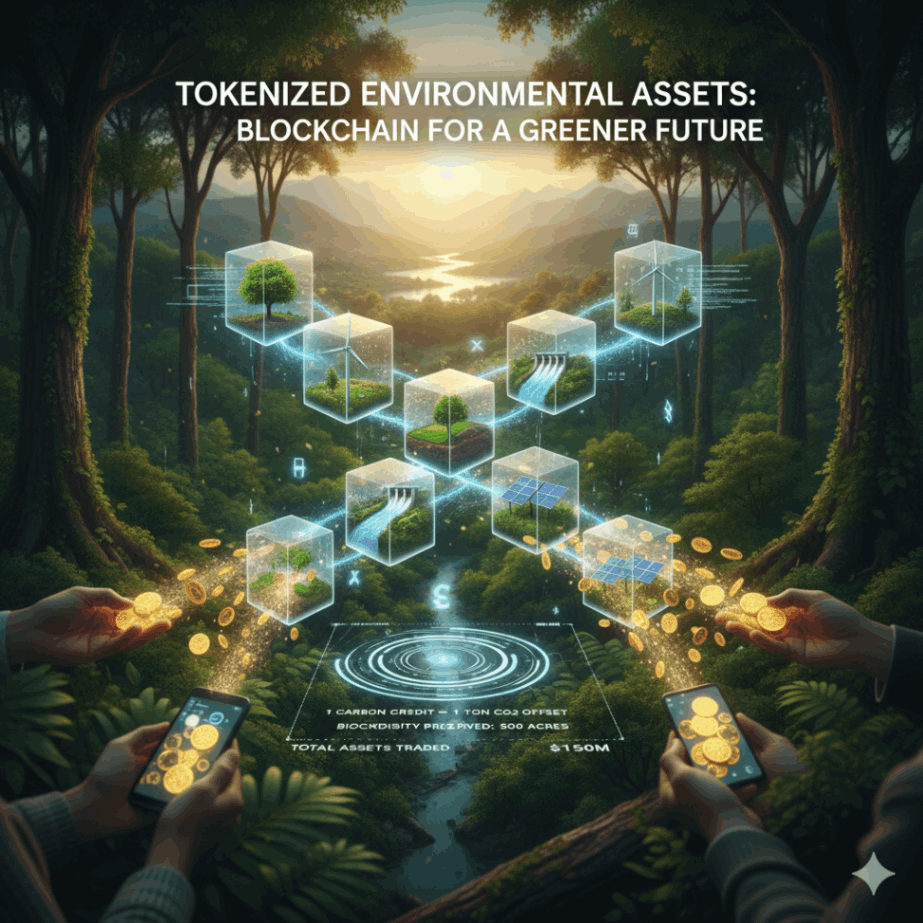
Tokenization of Nature: Assets like carbon credits, forests, or renewable energy are digitized into crypto tokens.
-
Community Ownership: ReFi platforms often distribute governance rights via DAOs (Decentralized Autonomous Organizations).
In essence, ReFi is the intersection of green finance and decentralized technology, enabling measurable climate impact through crypto-backed ecosystems.
How ReFi Differs from DeFi
| Aspect | DeFi (Decentralized Finance) | ReFi (Regenerative Finance) |
|---|---|---|
| Purpose | Financial yield, trading, and liquidity | Environmental and social regeneration |
| Asset Type | Cryptocurrencies and synthetic assets | Real-world assets like carbon credits, forests, and energy |
| Impact Measurement | Financial performance | Environmental and social outcomes |
| Governance | Token-based profit systems | DAO-based regenerative impact voting |
| Examples | Uniswap, Aave, Compound | Toucan Protocol, Regen Network, Moss.Earth |
Unlike DeFi, which extracts value through arbitrage and staking, ReFi adds value by regenerating ecosystems — making it a financial system with purpose.
The Core Mechanism: Tokenizing Environmental Assets
1. Carbon Credit Tokenization
ReFi projects transform carbon offsets into blockchain tokens. Each token represents a verifiable carbon credit that can be bought, sold, or retired.
Example:
-
Toucan Protocol connects verified carbon credits from registries like Verra and converts them into on-chain assets (BCT – Base Carbon Tonne).
2. Renewable Energy Tokenization
Platforms such as Energy Web Token (EWT) allow renewable energy producers to tokenize their electricity production, letting investors directly support clean power.
3. Biodiversity & Land Stewardship
Regen Network uses blockchain to reward land stewards who maintain biodiversity or sequester carbon in soil. Farmers receive Regen Tokens (REGEN) for measurable ecosystem services.
4. Ocean and Blue Economy Tokens
ReFi is extending to marine ecosystems, with projects like Ocean Protocol and Blue Carbon DAO focusing on oceanic carbon capture and marine restoration.
Real-World ReFi Projects Transforming Climate Finance
1. Toucan Protocol
-
Converts verified carbon credits into tradable crypto assets.
-
Supports transparency in voluntary carbon markets.
-
Collaborates with Polygon and other blockchain ecosystems.
2. Regen Network
-
Focuses on soil carbon sequestration and ecosystem monitoring.
-
Rewards regenerative agricultural practices.
-
Integrates scientific data verification through IoT and satellites.
3. Moss.Earth
-
A Brazilian platform issuing MCO2 Tokens, each representing 1 tonne of carbon offset.
-
Partners with companies like Airbus and One Tree Planted.
4. Flowcarbon
-
Supported by Adam Neumann (WeWork), Flowcarbon connects global carbon projects with tokenized carbon credits.
-
Uses C-GEO tokens as the standard for carbon-backed digital assets.
5. KlimaDAO
-
A decentralized climate-focused DAO that accumulates carbon tokens (like BCT) to increase the price floor of carbon and drive corporate accountability.
Why ReFi Matters for the Global Economy
1. Transparency and Traceability
Blockchain eliminates greenwashing by ensuring that every environmental claim is verifiable, immutable, and traceable.
2. Financial Inclusion
Local farmers, indigenous communities, and small businesses can directly access global capital through ReFi markets.
3. Decentralized Climate Action
Unlike traditional carbon markets controlled by large institutions, ReFi allows community-driven climate initiatives.
4. Bridging Profit and Purpose
ReFi aligns financial incentives with planetary health, creating a new class of impact investors.
Challenges Facing ReFi Adoption
| Challenge | Description | Potential Solution |
|---|---|---|
| Verification Complexity | Validating real-world ecological data on-chain is difficult. | Use IoT, satellite imaging, and oracles for data validation. |
| Regulatory Uncertainty | Lack of clear laws around tokenized nature assets. | Collaboration with regulators and ESG frameworks. |
| Market Liquidity | ReFi tokens are still niche and low-volume. | Integration with DeFi liquidity pools. |
| Greenwashing Risks | Not all “green tokens” are backed by credible projects. | Use verified registries like Verra, Gold Standard. |
The Future of ReFi: From Niche to Mainstream
ReFi has the potential to become a trillion-dollar ecosystem by linking climate finance, DeFi tools, and ESG investments. With growing demand for ESG transparency, carbon neutrality, and sustainable blockchain operations, ReFi is positioned to:
-
Power green CBDCs (Central Bank Digital Currencies).
-
Enable corporate carbon tracking on-chain.
-
Support UN Sustainable Development Goals (SDGs) through decentralized funding.
-
Integrate with AI-driven carbon measurement systems.
In the near future, entire smart cities may rely on ReFi-powered ecosystems to measure, fund, and reward environmental performance.
How Investors Can Participate in ReFi
If you’re an investor or crypto enthusiast interested in climate-positive finance, here’s how you can get involved:
-
Purchase Verified ReFi Tokens
Invest in verified tokens like MCO2, REGEN, or BCT. -
Stake in ReFi DAOs
Earn yield while supporting environmental outcomes (e.g., KlimaDAO). -
Support Local ReFi Projects
Partner with community-based initiatives that tokenize regenerative assets. -
Educate and Advocate
Promote credible ReFi projects to enhance adoption and transparency.
Frequently Asked Questions (FAQ)
1. What does ReFi mean in crypto?
ReFi stands for Regenerative Finance, a branch of crypto that funds projects aimed at restoring ecosystems and promoting sustainability through blockchain.
2. How is ReFi different from DeFi?
While DeFi focuses on financial profits, ReFi prioritizes environmental and social impact, using the same decentralized tools.
3. Are ReFi tokens profitable?
Yes, many ReFi tokens can yield both financial returns and environmental benefits, though their value depends on project legitimacy and adoption.
4. Is ReFi safe to invest in?
ReFi is relatively new and still evolving. Investors should verify project authenticity via trusted registries (Verra, Gold Standard) before participating.
5. What are examples of ReFi projects?
Top projects include Toucan Protocol, Regen Network, Moss.Earth, Flowcarbon, and KlimaDAO.
Conclusion: A Regenerative Future for Finance
ReFi represents a powerful evolution in finance one where profits align with planetary restoration. By merging blockchain transparency with real-world impact, ReFi projects are redefining capitalism for the climate age.
For investors, developers, and policymakers, Regenerative Finance is not just a trend — it’s the foundation of a new financial ecosystem that heals rather than harms.