Introduction
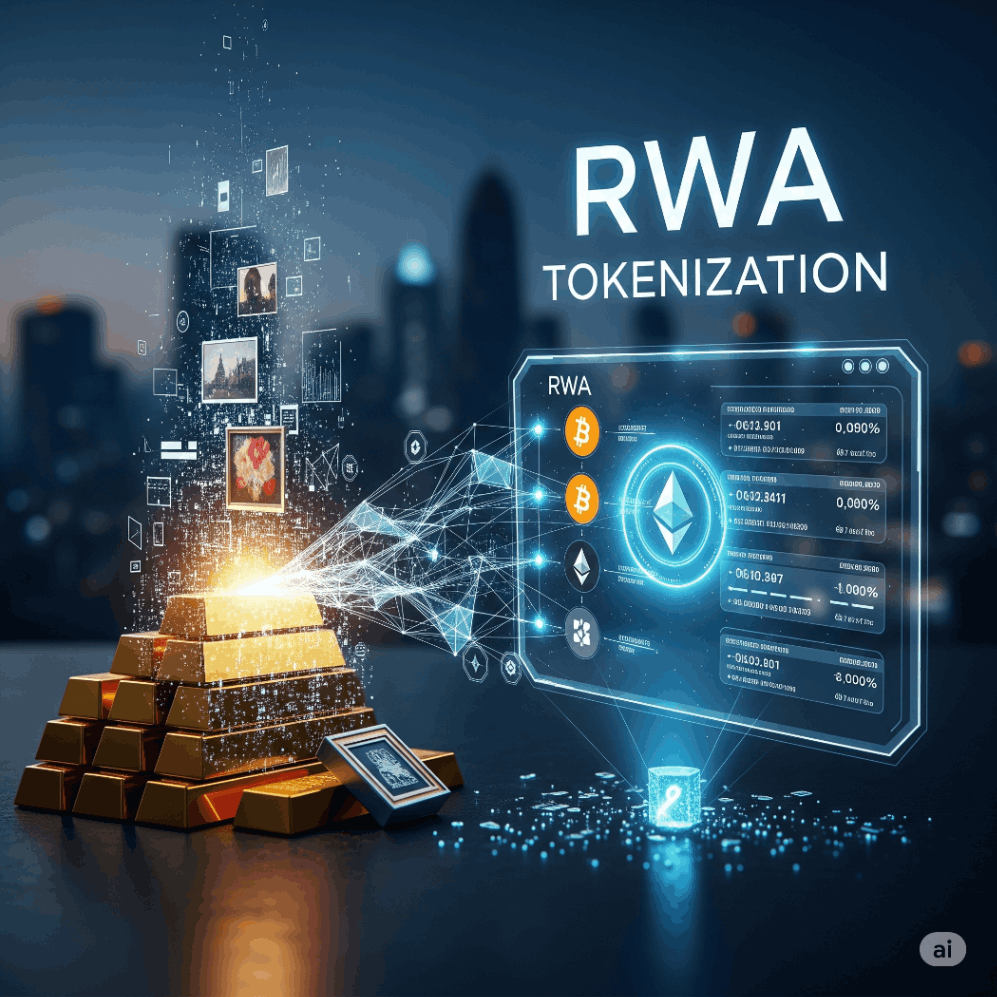
Global finance is undergoing a rapid transformation with the rise of tokenized real-world assets (RWA). By bringing physical assets such as real estate, commodities, and bonds onto the blockchain, tokenization bridges the gap between traditional finance (TradFi) and decentralized finance (DeFi). This evolution enhances liquidity, accessibility, and transparency while reshaping the way individuals and institutions invest worldwide.
In this article, we will explore the fundamentals of RWA tokenization, its applications in global finance, benefits, challenges, regulatory considerations, and the future outlook for investors and financial institutions.
What Are Tokenized Real-World Assets (RWA)?
Tokenized real-world assets (RWA) represent tangible or intangible assets recorded on blockchain networks in the form of digital tokens. These tokens are backed by real-world value, enabling fractional ownership and efficient transfer of assets.
Examples of tokenized RWAs include:
-
Real estate: Tokenizing commercial or residential properties.
-
Commodities: Gold, oil, or agricultural assets.
-
Securities: Stocks, government bonds, and treasury bills.
-
Intellectual property (IP): Music rights, patents, and copyrights.
Why Tokenization Matters in Global Finance
Tokenization addresses several inefficiencies in the traditional financial system.
Key Benefits
-
Liquidity: Converts traditionally illiquid assets (like real estate) into tradable tokens.
-
Accessibility: Opens investment opportunities to retail investors with fractional ownership.
-
Transparency: Blockchain ensures immutability and auditability.
-
Efficiency: Reduces settlement times and transaction costs.
-
Global reach: Allows cross-border investment without intermediaries.
The Process of Tokenizing Assets
| Step | Description |
|---|---|
| Asset Identification | Selecting a suitable asset such as real estate or bonds. |
| Legal Structuring | Establishing ownership rights, regulatory compliance, and custodianship. |
| Token Creation | Minting digital tokens on a blockchain (Ethereum, Polygon, etc.). |
| Distribution | Offering tokens to investors via platforms or exchanges. |
| Secondary Market Trading | Allowing token holders to trade on decentralized or centralized exchanges. |
Tokenized RWAs in Action: Use Cases
1. Real Estate Tokenization
Investors can purchase fractions of high-value properties worldwide. Platforms like RealT and Propy already offer tokenized real estate opportunities.
2. Tokenized Bonds and Securities
Governments and institutions are experimenting with blockchain-based treasury bills and bonds. For instance, Singapore and Hong Kong are piloting tokenized government bonds.
3. Commodities and Precious Metals
Gold-backed tokens such as Paxos Gold (PAXG) provide investors with blockchain-based exposure to physical gold stored in vaults.
4. Private Equity and Venture Capital
Tokenization enables fractional access to startups and private funds, reducing barriers to entry.
Global Impact of Tokenized RWAs
1. Financial Inclusion
By lowering the entry barrier, tokenization brings underserved populations into the investment ecosystem.
2. Institutional Adoption
Banks, hedge funds, and sovereign wealth funds are exploring RWA tokenization for efficiency and diversification.
3. Cross-Border Investments
Investors from different geographies can seamlessly invest in foreign real estate, bonds, or commodities without intermediaries.
4. Integration with DeFi
DeFi protocols like MakerDAO already accept tokenized RWAs as collateral, bridging TradFi and DeFi.
Regulatory Landscape
The regulation of RWAs varies across jurisdictions.
-
United States: The SEC treats tokenized securities under existing securities laws.
-
European Union: The MiCA (Markets in Crypto-Assets) framework provides guidelines for asset-backed tokens.
-
Asia-Pacific: Singapore and Hong Kong are creating sandboxes for tokenized assets.
| Region | Regulatory Approach |
|---|---|
| US | Strict compliance under SEC and FINRA oversight. |
| EU | MiCA framework governing tokenized assets. |
| Asia-Pacific | Regulatory sandboxes to encourage innovation. |
| Middle East | UAE and Bahrain emerging as RWA-friendly hubs. |
For more details, refer to trusted sources like World Economic Forum and IMF Reports.
Challenges in Tokenizing RWAs
Despite the benefits, tokenized assets face key challenges:
-
Regulatory uncertainty: Inconsistent rules across regions.
-
Custody risks: Safeguarding real-world collateral.
-
Valuation transparency: Ensuring accurate pricing mechanisms.
-
Liquidity fragmentation: Multiple platforms create siloed markets.
-
Technological risks: Smart contract vulnerabilities and hacking threats.
Future Outlook: Tokenized RWAs by 2030
-
Mainstream Adoption: Financial giants like BlackRock and J.P. Morgan are exploring tokenized assets.
-
RWA ETFs and Mutual Funds: Retail investors may soon access tokenized RWA funds.
-
Integration with CBDCs: Central Bank Digital Currencies (CBDCs) may accelerate adoption.
-
Global Standards: Unified regulations could streamline cross-border investments.
Frequently Asked Questions (FAQ)
1. What are tokenized real-world assets?
Tokenized RWAs are digital tokens backed by physical or financial assets like real estate, bonds, or commodities, recorded on blockchain.
2. Are tokenized assets safe?
They provide transparency and security via blockchain, but risks like regulation, custody, and valuation remain.
3. How can retail investors access tokenized RWAs?
Through specialized platforms offering fractional ownership of assets such as tokenized properties, commodities, or bonds.
4. Do tokenized assets require KYC/AML compliance?
Yes, most regulated platforms enforce Know Your Customer (KYC) and Anti-Money Laundering (AML) checks.
5. Will tokenization replace traditional finance?
It won’t fully replace TradFi but will complement and enhance it, improving efficiency and access globally.
Conclusion
Tokenized real-world assets (RWA) are redefining the financial landscape by enabling broader access, transparency, and efficiency in global finance. While challenges in regulation and infrastructure remain, the momentum toward adoption is undeniable.
From real estate and commodities to bonds and private equity, tokenization is set to transform how capital flows in the digital economy. For investors, institutions, and policymakers, understanding this shift is not just an opportunity it’s a necessity.