Introduction
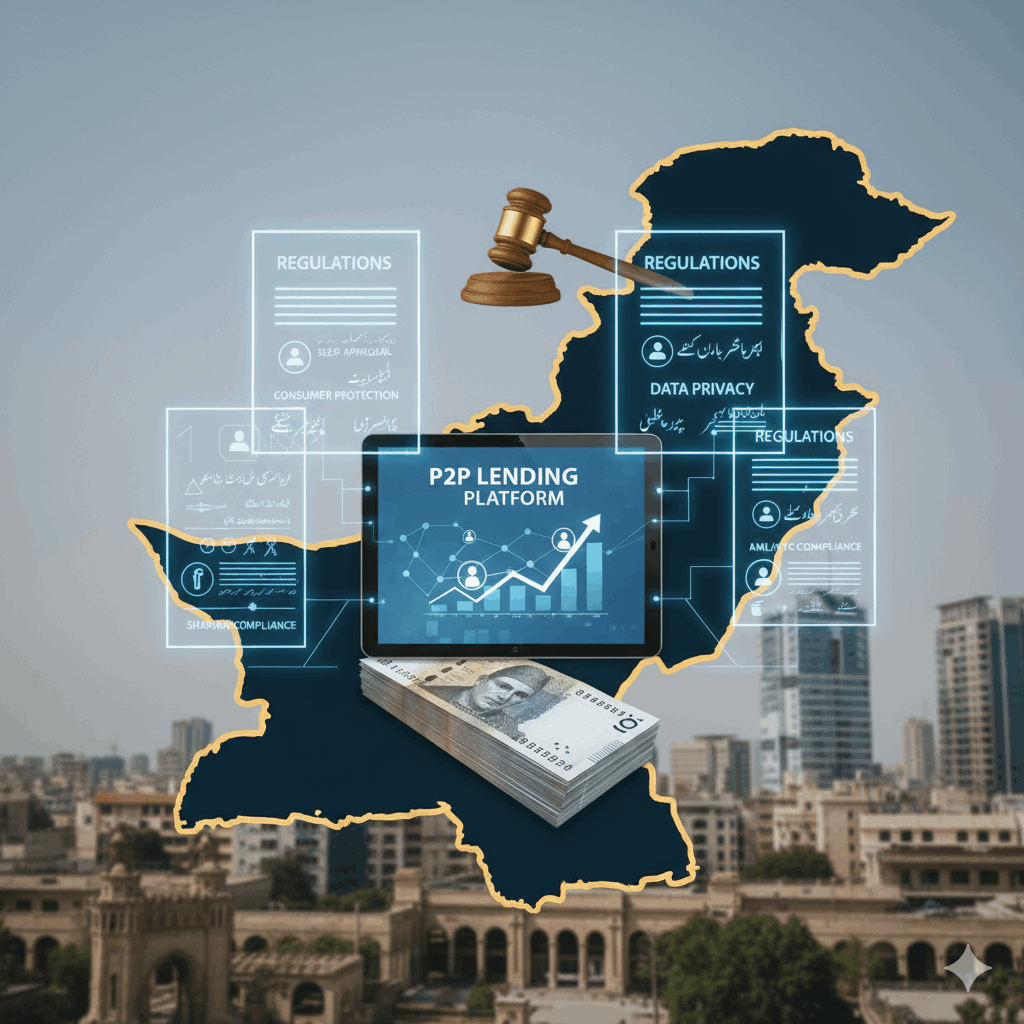
The financial ecosystem across Asia is rapidly evolving, with peer-to-peer (P2P) lending emerging as a disruptive force. Unlike traditional banking, P2P lending connects borrowers directly with lenders through digital platforms, bypassing intermediaries. This model is particularly significant in regions like Pakistan, where access to formal credit is limited for small businesses and individuals.
In this article, we will analyze:
-
The concept and growth of P2P lending.
-
The regulatory frameworks in Pakistan and wider Asia.
-
Popular P2P lending platforms.
-
The opportunities and challenges for borrowers and investors.
For more fintech insights, also explore our guide on Digital Wallet Security Best Practices.
What is Peer-to-Peer (P2P) Lending?
P2P lending is a fintech-driven financial service where individuals lend money directly to borrowers via online platforms. These platforms use algorithms, credit scoring models, and AI to match lenders with suitable borrowers.
Key Features:
-
Direct lending: No banks or traditional intermediaries.
-
Higher returns: Lenders may earn higher interest compared to savings accounts.
-
Accessibility: Provides credit to underserved populations.
-
Technology-driven: Platforms use data analytics for creditworthiness.
The Rise of P2P Lending in Asia
Asia is one of the fastest-growing fintech hubs globally, and P2P lending plays a central role. According to the Cambridge Centre for Alternative Finance, China once accounted for over 75% of the global P2P lending market before regulatory crackdowns.
Key Drivers in Asia:
-
Rapid digital adoption.
-
Lack of access to formal banking.
-
High mobile penetration.
-
Supportive fintech ecosystems in countries like Singapore, Indonesia, and India.
Regulatory Landscape of P2P Lending in Pakistan
In Pakistan, P2P lending is still in its early stages. The Securities and Exchange Commission of Pakistan (SECP) has started drafting frameworks to regulate digital lending and crowdfunding platforms.
Current Status in Pakistan:
-
P2P lending is not fully legalized but is being evaluated under crowdfunding and digital finance regulations.
-
SECP issued a regulatory sandbox allowing fintech startups to test P2P models.
-
Emphasis is placed on investor protection and data security.
Challenges in Pakistan:
-
Limited awareness among potential borrowers.
-
Lack of credit scoring infrastructure.
-
High risk of defaults without robust regulation.
For a detailed perspective, see our article on Small Business Financing via Fintech in Pakistan.
P2P Lending Regulations Across Asia
Different Asian countries have varying approaches to P2P lending regulations. Below is a summary:
| Country | Regulatory Authority | Current Status |
|---|---|---|
| Pakistan | Securities and Exchange Commission (SECP) | Pilot regulatory sandbox; no full legal framework yet. |
| India | Reserve Bank of India (RBI) | Fully regulated under NBFC-P2P guidelines since 2017. |
| China | China Banking and Insurance Regulatory Commission (CBIRC) | Strict crackdowns; most P2P platforms shut down due to fraud cases. |
| Singapore | Monetary Authority of Singapore (MAS) | Licensed under securities & lending frameworks; strong investor protection. |
| Indonesia | Otoritas Jasa Keuangan (OJK) | Comprehensive regulations since 2016; over 100 licensed P2P platforms. |
| Malaysia | Securities Commission Malaysia | P2P platforms licensed under Capital Markets and Services Act (CMSA). |
Popular P2P Lending Platforms in Asia
While Pakistan is still developing its framework, many Asian countries have successful platforms operating under regulatory oversight.
Examples:
-
India: Faircent, LenDenClub.
-
Singapore: Funding Societies, MoolahSense.
-
Indonesia: Investree, KoinWorks.
-
Malaysia: Funding Societies Malaysia, CapBay.
These platforms demonstrate the potential blueprint for Pakistan if regulations mature.
Opportunities for Pakistan
P2P lending can transform Pakistan’s financial sector by:
-
Bridging the credit gap for SMEs and individuals.
-
Encouraging financial inclusion in rural areas.
-
Creating alternative investment opportunities for retail investors.
-
Supporting digital Pakistan initiatives through fintech adoption.
Risks and Concerns
While opportunities exist, risks must be managed:
-
Fraud and scams due to weak regulations.
-
High default rates without proper credit scoring.
-
Investor protection challenges.
-
Cybersecurity threats to sensitive financial data.
Effective regulatory oversight is crucial for long-term growth.
Future of P2P Lending in Pakistan and Asia
The future depends on regulatory evolution and market trust. With SECP’s involvement, Pakistan may soon allow fully licensed P2P platforms, inspired by India and Indonesia’s models.
Globally, the trend is moving towards:
-
Hybrid lending models combining banks and fintech.
-
AI-driven risk assessment.
-
Tokenized lending platforms using blockchain.
For insights into tokenization, read our article on Tokenized Intellectual Property Financing.
Frequently Asked Questions (FAQ)
Q1. Is P2P lending legal in Pakistan?
Currently, P2P lending in Pakistan is being tested under SECP’s regulatory sandbox. A full legal framework is yet to be launched.
Q2. What are the risks of P2P lending?
Risks include borrower defaults, fraud, lack of transparency, and cybersecurity threats.
Q3. Which Asian country has the most developed P2P market?
Indonesia, India, and Singapore have well-regulated, thriving P2P lending markets.
Q4. Can Pakistani investors participate in foreign P2P platforms?
Technically yes, but it depends on foreign platform policies, currency controls, and local regulatory permissions.
Q5. How can P2P lending benefit small businesses?
It provides quick, accessible credit without relying on traditional banks, which often reject SMEs due to lack of collateral.
Conclusion
Peer-to-Peer lending represents a transformative opportunity for Pakistan and Asia’s broader financial markets. With proper regulation, investor education, and technology adoption, P2P lending can close the credit gap and promote financial inclusion.
Pakistan has the potential to follow in the footsteps of India, Singapore, and Indonesia if SECP finalizes clear guidelines. Until then, the fintech ecosystem must prioritize transparency, trust, and security.
For more in-depth fintech updates, visit Fintech Zoomiom.