Introduction
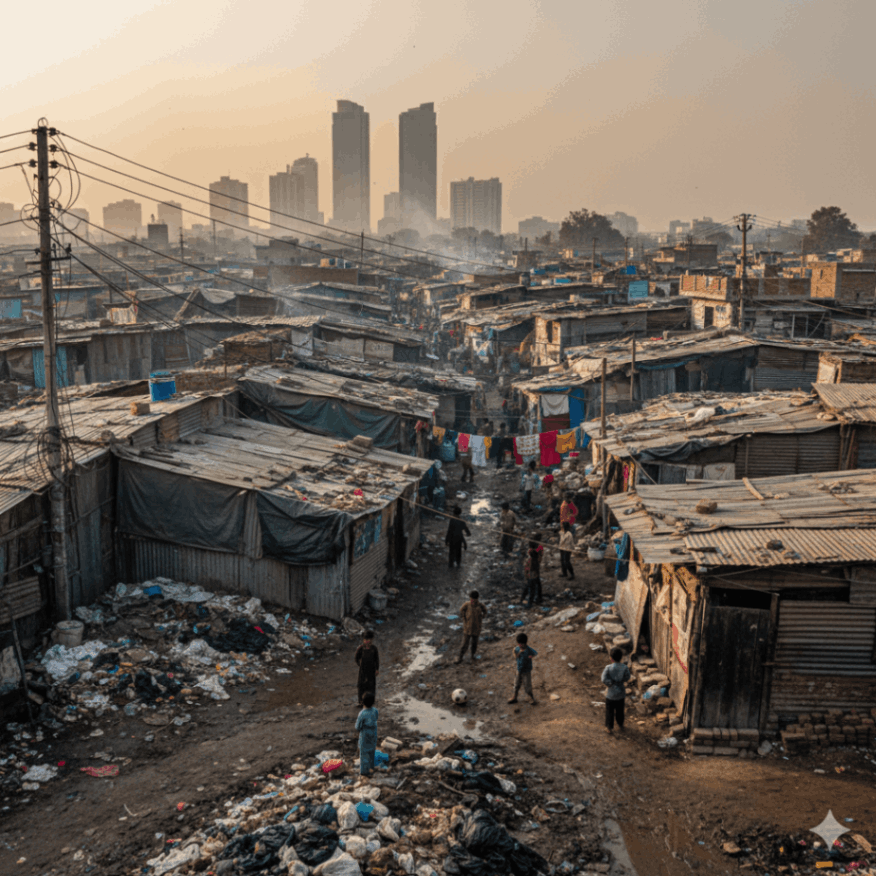
Pakistan is home to millions of people living in urban slums, where access to traditional banking services is limited. Despite rapid digitalization, a large portion of the population remains unbanked or underbanked, making them vulnerable to poverty cycles, loan sharks, and lack of opportunities.
This is where FinTech (Financial Technology) plays a critical role. Through mobile banking, digital wallets, micro-loans, and blockchain-enabled transparency, FinTech solutions can uplift marginalized communities in cities like Karachi, Lahore, and Islamabad.
In this article, we will explore:
-
The challenges faced by urban slum communities in Pakistan.
-
The potential of FinTech in financial inclusion.
-
Practical solutions that are already making a difference.
-
Policy recommendations and future outlook.
For more insights on FinTech’s role in rural and disaster-hit regions, you can also read our article: Agritech & Floods: How Fintech Helps Farmers Recover from Climate Disasters.
Challenges Faced by Urban Slum Communities
Urban slum dwellers face systemic barriers in accessing financial services. Some major challenges include:
-
Lack of Documentation: Many residents don’t possess CNICs or verifiable addresses.
-
Low Financial Literacy: Awareness about digital banking is minimal.
-
High Transaction Costs: Traditional banks require minimum balances and impose hidden fees.
-
Exploitation by Informal Lenders: Loan sharks charge extremely high interest rates.
-
Limited Trust in Institutions: Many slum dwellers rely on cash transactions due to mistrust of banks.
How FinTech Can Help
FinTech bridges the financial inclusion gap by offering affordable, accessible, and user-friendly digital solutions. The key benefits include:
-
Accessibility: Mobile phones replace physical bank branches.
-
Low Costs: Minimal transaction fees compared to banks.
-
Transparency: Digital records reduce exploitation.
-
Financial Education: Apps can integrate learning modules.
-
Scalability: Millions of users can be reached simultaneously.
Key FinTech Solutions for Urban Slums in Pakistan
1. Mobile Banking Apps
-
Apps like Easypaisa and JazzCash allow slum residents to send/receive money, pay bills, and recharge phones without a bank account.
-
They offer agent networks in local shops, making it easy to deposit or withdraw cash.
2. Digital Wallets & QR Payments
-
Micro-merchants can accept QR code payments, reducing reliance on cash.
-
Digital wallets enable safe storage of savings without a traditional account.
3. Microfinance & Nano-Loans
-
FinTech-driven micro-lending platforms provide small, short-term loans without collateral.
-
Helps families invest in small businesses like food stalls or rickshaw services.
4. Blockchain for Transparency
-
Blockchain can ensure that welfare and subsidy payments reach the intended recipients without corruption.
-
NGOs and the government can monitor disbursement in real-time.
5. InsurTech for Healthcare
-
Affordable micro-insurance plans through mobile apps can protect slum dwellers from medical emergencies.
Case Studies
| FinTech Initiative | Target Group | Impact |
|---|---|---|
| Easypaisa | Unbanked households in Karachi slums | Enabled digital bill payments & remittances |
| JazzCash | Street vendors & small shopkeepers | Reduced cash dependency, improved savings |
| Akhuwat Digital | Low-income entrepreneurs | Interest-free micro-loans via mobile |
| Sehat Kahani App | Slum families without healthcare | Telemedicine access with mobile payments |
Government and Policy Role
The government and regulators must:
-
Simplify KYC requirements for slum dwellers.
-
Promote digital literacy campaigns in local languages.
-
Offer tax incentives for FinTech startups working in low-income areas.
-
Collaborate with NGOs to expand microfinance access.
The State Bank of Pakistan (SBP) has already launched initiatives to support branchless banking, but stronger policies are needed to specifically target urban slum financial inclusion.
The Future of FinTech in Pakistan’s Slums
With increasing smartphone penetration and falling internet costs, Pakistan is poised for a FinTech revolution. By 2030, over 70% of the population could have access to digital banking, provided inclusion strategies focus on the urban poor.
FinTech holds the power to transform lives by:
-
Creating digital credit histories for the poor.
-
Enabling safe remittances from abroad directly into mobile wallets.
-
Reducing corruption in welfare distribution.
For global perspective, you can also check the World Bank report on Financial Inclusion here.
FAQs
1. Why is FinTech important for urban slums in Pakistan?
FinTech provides affordable financial services like mobile payments, micro-loans, and insurance, helping the poor escape dependency on loan sharks.
2. Can slum dwellers use FinTech without a CNIC?
Some services require CNIC, but simplified KYC policies and agent-assisted registrations are making access easier.
3. Which mobile banking apps are most popular in Pakistani slums?
Easypaisa and JazzCash dominate due to their wide agent networks and low transaction fees.
4. How does blockchain help urban poor communities?
Blockchain ensures transparency in welfare fund distribution, reducing leakages and corruption.
5. What role should the government play?
The government should provide supportive regulations, encourage FinTech startups, and promote financial literacy programs.
Conclusion
FinTech is not just about convenience it is about economic empowerment. For Pakistan’s urban slum communities, digital finance can break poverty cycles, reduce exploitation, and open opportunities for entrepreneurship.
By combining technology, policy support, and financial literacy, Pakistan can move closer to achieving true financial inclusion for all.
For more in-depth FinTech insights, visit our homepage: FinTech Zoom IOM.