Introduction
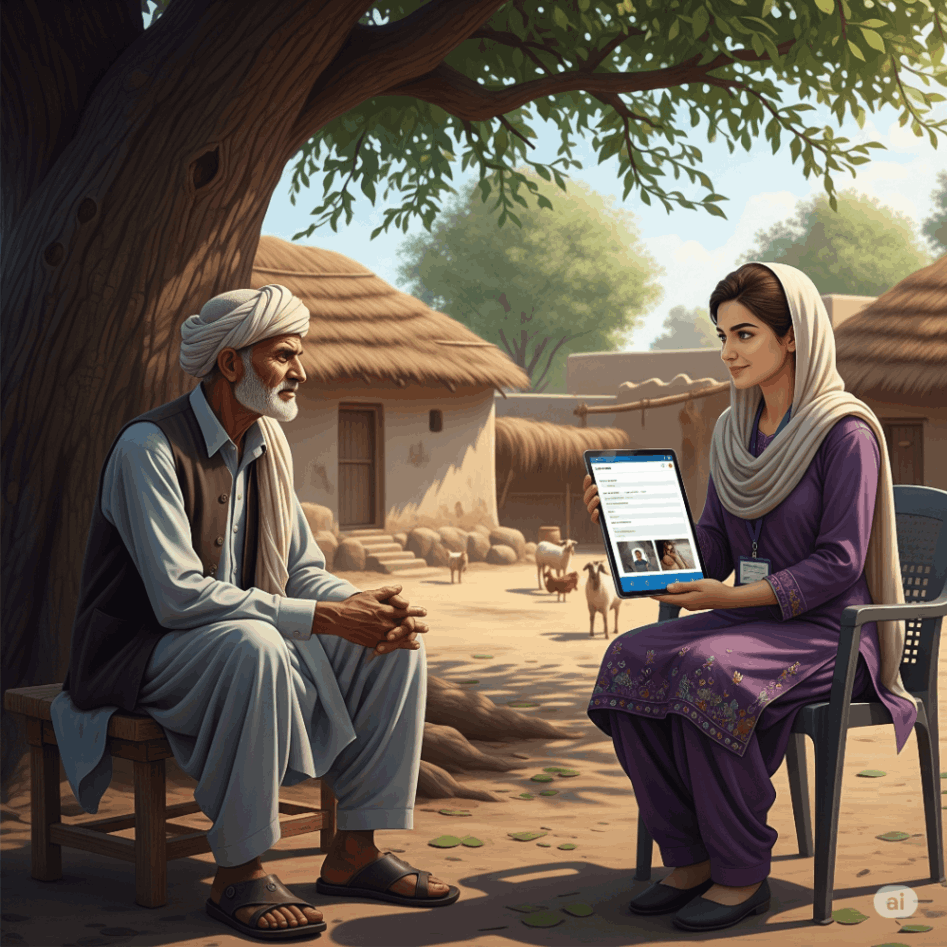
The shift from traditional Know Your Customer (KYC) processes to Digital KYC (e-KYC) has revolutionized the way banks, fintech companies, and microfinance institutions verify customer identities. However, in rural Pakistan, this transition faces significant hurdles. Limited digital infrastructure, low financial literacy, and cultural barriers have made the adoption of digital KYC a slow and complex process.
For a fintech ecosystem to thrive in rural Pakistan, overcoming these KYC challenges is crucial. This article breaks down the core obstacles, their implications, and potential solutions, aligning with Pakistan’s digital financial inclusion goals.
What is Digital KYC?
Digital KYC refers to the use of technology such as biometric verification, AI-powered identity checks, and online document submissions to verify a customer’s identity remotely.
In Pakistan, the State Bank of Pakistan (SBP) and the National Database & Registration Authority (NADRA) have supported e-KYC initiatives to expand financial inclusion.
Benefits of Digital KYC
-
Faster onboarding compared to physical verification
-
Lower operational costs for financial institutions
-
Reduced fraud through biometric authentication
-
Greater accessibility for remote customers
For a detailed comparison of Digital KYC and traditional KYC, see our article: Agent Banking vs Neobanking for Micro-capital in Pakistan.
Key Challenges of Digital KYC in Rural Pakistan
Despite its potential, digital KYC adoption in rural areas faces multiple challenges.
1. Limited Digital Infrastructure
-
Poor internet connectivity in rural regions limits access to online verification systems.
-
Unreliable electricity supply affects the use of biometric devices and smartphones.
-
Mobile penetration is growing, but smartphone ownership remains low.
Example: According to the Pakistan Telecommunication Authority (PTA), internet penetration in rural areas is significantly lower than in urban centers.
2. Low Digital and Financial Literacy
-
Many rural residents struggle to navigate mobile banking apps or upload ID documents.
-
Lack of awareness about data privacy and fraud risks leads to mistrust.
-
Women in rural areas often have less access to digital tools due to cultural norms.
3. Documentation and Identity Gaps
-
NADRA CNIC coverage is high, but certain segments such as nomadic groups still lack proper identification.
-
Expired or misplaced CNICs create delays in onboarding.
-
Issues in name spellings and mismatched addresses between documents cause verification failures.
4. Trust Deficit in Digital Platforms
-
Fear of scams makes people hesitant to share personal data online.
-
Preference for face-to-face interactions with bank agents.
-
Past incidents of SIM fraud and identity theft have deepened suspicion.
5. Regulatory and Compliance Barriers
-
Banks and fintechs must comply with Anti-Money Laundering (AML) and Counter-Terrorism Financing (CTF) laws.
-
Strict SBP guidelines require advanced verification tools, which may not be affordable for smaller institutions.
-
Rural agents often lack training to handle digital verification protocols.
6. Cost of Implementation
-
Deploying biometric devices, training agents, and upgrading systems is expensive.
-
Smaller microfinance institutions struggle to justify high e-KYC costs for low-margin customers.
Comparative Table Digital KYC Challenges in Rural vs Urban Pakistan
| Challenge | Rural Pakistan | Urban Pakistan |
|---|---|---|
| Internet Connectivity | Low | High |
| Smartphone Penetration | Medium-Low | High |
| Digital Literacy | Low | Medium-High |
| Identity Document Availability | Medium | High |
| Trust in Digital Platforms | Low | Medium |
| Cost of Implementation (Per User) | High | Medium |
Potential Solutions to Overcome Digital KYC Challenges
Addressing these issues requires a multi-stakeholder approach involving the government, fintech companies, telecom operators, and NGOs.
1. Improving Infrastructure
-
Public-private partnerships to expand 4G/5G coverage in rural areas.
-
Investment in solar-powered KYC devices to tackle electricity issues.
2. Enhancing Digital Literacy
-
Launch community-based digital literacy programs.
-
Partner with local schools and NGOs to train women and youth.
3. Strengthening Trust
-
Transparent privacy policies in local languages.
-
Awareness campaigns on fraud prevention and safe digital practices.
4. Regulatory Flexibility
-
Introduce tiered KYC requirements for low-value accounts to encourage adoption.
-
Encourage regulatory sandboxes for fintech innovations in KYC.
5. Reducing Costs
-
Use shared agent networks across banks to lower device and training expenses.
-
Explore cloud-based KYC platforms to minimize infrastructure costs.
The Role of NADRA and SBP
Both NADRA and SBP are key to ensuring secure, accessible, and compliant digital KYC systems.
-
NADRA: Provides biometric verification services that can be integrated into banking apps.
-
SBP: Issues guidelines and frameworks to standardize KYC while promoting financial inclusion.
For more details, see the official State Bank of Pakistan KYC Guidelines.
Future Outlook
With Pakistan’s Digital Pakistan Vision, rural e-KYC adoption could accelerate if:
-
5G connectivity expands to underserved areas.
-
Affordable smartphones become widely available.
-
Fintech companies innovate with offline KYC solutions that sync when online.
If these steps are taken, digital KYC could unlock millions of unbanked rural customers, strengthening Pakistan’s financial ecosystem.
FAQ Digital KYC in Rural Pakistan
Q1: What is the biggest barrier to digital KYC in rural Pakistan?
A: Limited internet access and low digital literacy remain the top challenges.
Q2: Can rural residents complete KYC without visiting a branch?
A: Yes, but only if they have access to a smartphone, internet, and valid CNIC.
Q3: Is digital KYC safe for rural users?
A: Yes, if done through official banking apps and NADRA-verified platforms.
Q4: How can banks build trust in rural areas?
A: By combining in-person awareness sessions with secure, transparent online platforms.
Q5: Will e-KYC replace traditional KYC entirely?
A: In urban areas, possibly yes. In rural areas, a hybrid model will likely remain for the near future.
Final Thoughts:
The future of digital KYC in rural Pakistan depends on collaboration between stakeholders, investments in infrastructure, and trust-building initiatives. Fintechs that adapt to rural realities will lead the way in financial inclusion.