Introduction
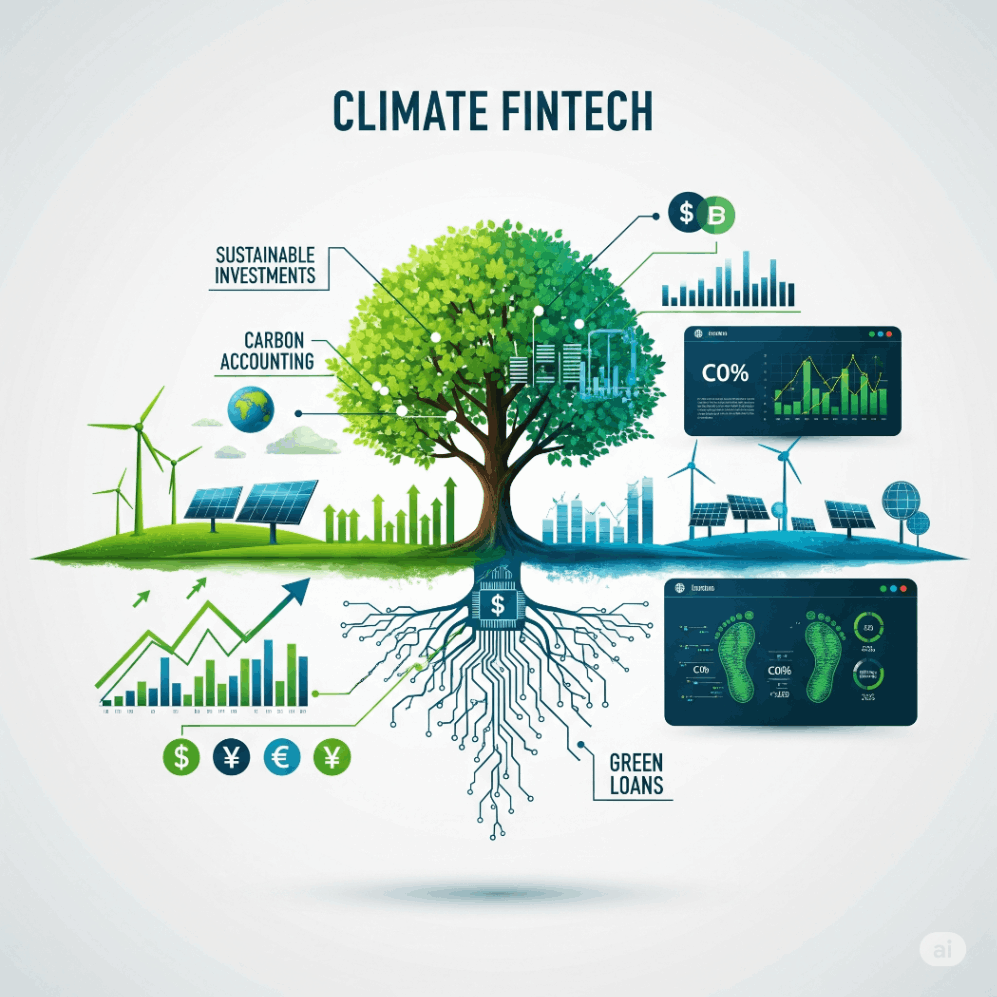
The global climate crisis demands urgent action, and finance is at the heart of the solution. Climate fintech the fusion of climate-focused finance and digital technology is emerging as a powerful force to accelerate sustainable investments, enable green consumer choices, and improve climate risk management.
From carbon credit trading platforms to AI-driven sustainable investment tools, climate fintech is empowering businesses, investors, and individuals to contribute to a low-carbon economy. According to the World Economic Forum, fintech innovations have the potential to unlock trillions of dollars in climate-related investments by 2030.
What is Climate Fintech?
Climate fintech refers to financial technology solutions designed to address climate change challenges. These tools aim to:
-
Support green finance and sustainable investments
-
Promote low-carbon economic models
-
Increase transparency in climate-related financial decisions
-
Democratize access to climate-positive financial products
Climate fintech solutions are transforming areas such as carbon markets, renewable energy financing, sustainable banking, and ESG (Environmental, Social, Governance) investing.
Key Drivers Behind Climate Fintech Growth
Several factors are fueling the rise of climate fintech:
| Driver | Description |
|---|---|
| Climate Urgency | Increasing climate disasters push governments and companies toward sustainability. |
| Policy & Regulation | Green finance mandates and carbon disclosure requirements boost innovation. |
| Investor Demand | Millennials and Gen Z prefer eco-conscious investments and services. |
| Technological Advances | Blockchain, AI, and big data enable new models for transparency and efficiency. |
| Corporate Sustainability Goals | ESG commitments drive companies to integrate climate fintech solutions. |
Examples of Climate Fintech Solutions
Here are some prominent ways climate fintech is making an impact:
1. Carbon Credit Trading Platforms
Platforms such as Pachama and Toucan Protocol use blockchain to ensure transparent and verifiable carbon offset transactions.
2. AI-Powered ESG Investment Tools
Fintech platforms like Arabesque S-Ray provide AI-driven analytics for investors to assess companies’ environmental performance.
3. Green Digital Banking
Neobanks such as Aspiration and Tomorrow Bank focus on sustainable spending, carbon offsetting, and green investment portfolios.
4. Crowdfunding for Renewable Energy
Platforms like Trine allow individuals to fund solar energy projects in developing countries while earning returns.
Benefits of Climate Fintech
Climate fintech offers multiple advantages for the environment and the economy:
-
Scalability Digital tools reach global audiences quickly.
-
Transparency Blockchain ensures credibility in carbon tracking.
-
Accessibility Enables retail investors to participate in green finance.
-
Data-Driven Decisions AI and big data improve climate risk assessments.
-
Behavior Change Apps encourage eco-conscious consumer spending.
Challenges Facing Climate Fintech
Despite its promise, climate fintech faces hurdles:
| Challenge | Impact | Possible Solution |
|---|---|---|
| Regulatory Complexity | Slows adoption in different jurisdictions | Harmonize climate finance regulations globally |
| Greenwashing Risk | Misleading claims harm trust | Independent verification and reporting standards |
| Technology Access Gap | Developing countries face barriers | Affordable digital infrastructure investments |
| Market Fragmentation | Many small players with limited reach | Industry collaborations and partnerships |
How Businesses Can Leverage Climate Fintech
To make the most of climate fintech, businesses should:
-
Adopt Green Payment Solutions Integrate APIs that allow customers to track and offset their carbon footprint.
-
Invest in Climate-Focused Portfolios Use robo-advisors specializing in ESG investing.
-
Participate in Carbon Markets Use blockchain-based carbon credit exchanges to meet sustainability goals.
-
Partner with Climate Startups Collaborate with emerging fintech innovators.
For deeper insights, see our guide on How Open Banking Can Support Sustainable Finance.
Future Trends in Climate Fintech
Looking ahead, we can expect:
-
Tokenized Carbon Credits Making carbon offset trading more liquid and accessible.
-
AI-Driven Climate Risk Scoring Real-time analysis for investment decisions.
-
Green DeFi (Decentralized Finance) Blockchain-based lending for renewable projects.
-
Integrated Consumer Apps Linking banking, shopping, and carbon tracking.
Trusted Resources for Climate Fintech Insights
Here are some reputable sources for staying updated:
FAQ Climate Fintech
Q1: How does climate fintech differ from traditional green finance?
A: Traditional green finance focuses on funding eco-friendly projects, while climate fintech uses digital tools to scale, democratize, and increase transparency in those investments.
Q2: Is climate fintech profitable?
A: Yes. Many solutions offer competitive returns while addressing sustainability, attracting both impact-driven and profit-focused investors.
Q3: Can small businesses use climate fintech?
A: Absolutely. From carbon tracking APIs to sustainable payment gateways, solutions exist for companies of all sizes.
Q4: Are carbon offsets reliable?
A: They can be, provided they are verified by trusted organizations and recorded on transparent platforms like blockchain.
Conclusion
Climate fintech is more than a trend it’s a necessary evolution in the way we finance our planet’s future. By blending financial innovation with environmental responsibility, climate fintech enables global stakeholders to act decisively against climate change.
For more in-depth articles on sustainable finance and fintech trends, visit Fintech Zoom IOM.