If you’re shopping for a family SUV, the Chevy Traverse stands out for its space and performance. A big question for many buyers is the Chevy Traverse fuel economy, especially for the 2025 model. This guide breaks down what miles per gallon you can expect, based on official ratings. We’ll look at city, highway, and combined figures, plus tips. We’ll maximize efficiency. Whether you’re commuting or road-tripping, understanding the heavy Traverse’s economy helps you save at the pump. Let’s get into the details.
Overview of the 2025 Chevy Traverse economy
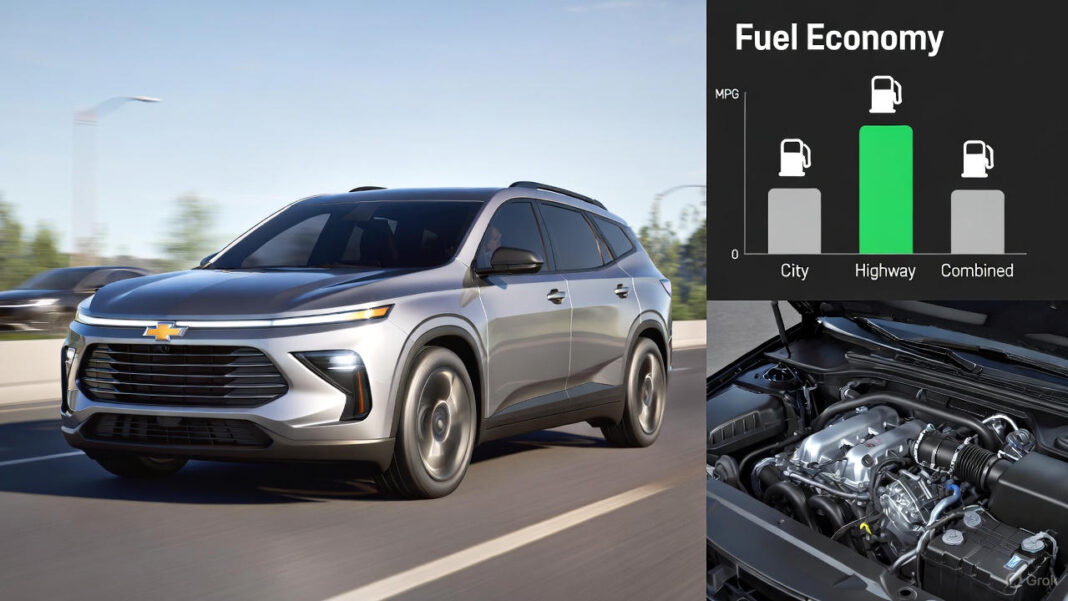
The 2025 Chevy Traverse offers solid fuel efficiency for a three-row SUV. According to EPA estimates, front-wheel-drive models get 20 mpg in the city, 27 mpg on the highway, and 23 mpg combined. All-wheel-drive versions dip slightly to 19 city, 24 highway, and 21 combined. These numbers make the Chevy Traverse’s fuel economy competitive in its class.
Powered by a 2.5-liter turbocharged four-cylinder engine, it delivers 328 horsepower while keeping efficiency in mind—features like automatic stop/start, engine idle maintenance, and fuel-conserving idle times. For families in urban areas, the city mpg means fewer stops at the gas station. Highway FE S shines for long drives, potentially covering over 500 miles on a full tank.
Real-world driving can vary based on habits and conditions. To learn more about fuel-saving tips, check this Energy.gov resource on mileage tips. Overall, the 2025 Chevy Traverse’s fuel economy strikes a balance between power and savings. (132 words)
History of Chevy Traverse Fuel Economy
The Chevy Traverse launched in 2009 as a full-size crossover with a V6 engine. Early models achieved about 15 mpg city and 22 highway for front-wheel drive, with all-wheel drive slightly lower. This reflected the era’s focus on power over efficiency.
By 2013, minor updates increased it to 17/24 mpg. The second generation in 2018 brought better aerodynamics and a refined V6, boosting to 18/27 for FWD. This marked a shift toward greener designs and fuel economy amid rising fuel costs.
In 2024, Chevy switched to a turbo four-cylinder, enhancing Chevy Traverse fuel economy to turbocharged levels—the boosting continues, with Traverse’s tech for better mpg without losing capability.
Over the years, improvements stem from stricter regulations and the greater demand for savings. For historical vehicle data, visit EPA’s Traverse page. This evolution shows Chevy’s commitment to EPA-efficient family transport.
Focused on V6 power with modest mpg.
Recent Improvements
Turbo engines raised efficiency standards.
Key Features Affecting Fuel Economy
Several features in the 2025 Traverse boost its mpg. The turbocharged engine optimizes power delivery, reducing waste. An eight-speed automatic transmission shifts smoothly for better efficiency.
Aerodynamic design cuts drag, aiding highway mpg. Lightweight materials lower overall weight, easing the engine stop/start system’s shut-off and saving fuel.
Traction modes adjust for conditions, maintaining optimal performance while adapting to consumption. Eco-friendly tires reduce rolling resistance.
These elements make Chevy Traverse fuel economy a standout. For tech insights, the intechTraverse covers automotive innovations. Combined, they offer a practical SUV for daily use.
Engine Technology
Turbo setup enhances mpg.
Benefits of Improved Chevy Traverse Fuel Economy
Better mpg means lower fuel bills over time. For a family driving 15,000 miles yearly, the 2025 Traverse could save hundreds of dollars compared to older years. This frees up budget for other needs.
Environmentally, higher efficiency cuts emissions, supporting cleaner air. It’s a small step toward sustainability without sacrificing style or comfort.
Reliability improves with modern engines, potentially reducing maintenance costs. Long highway ranges mean fewer refills on trips, adding convenience.
In cities, good city mpg eases commuting stress. Overall, the strong Chevy Traverse fuel economy enhances the ownership experience. For more on vehicle costs, see this University of Maryland Extension guide. It’s about smart, long-term value.
Cost Savings
Its usual expenses have significantly increased.
Environmental Impact
Lowers carbon footprint.
Potential Risks with Fuel Economy Claims
While EPA ratings guide expectations, real mpg can fall short due to aggressive driving or heavy loads. MPGr-relying on estimates might lead to disappointment if habits don’t match.
All-wheel drive drops Chevy Traverse fuel economdon’tghtly, so consider needs. Premium fuel, if required, adds costs.
Maintenance neglect, such as filter maintenance, harms efficiency. Cold weather or hilly terrain also impacts figures.
Risks include higher expenses if mpg underperforms. Always test drive to gauge personally. Awthe MPGness helps manage expectations effectively.
Technology Behind 2025 Traverse Efficiency
Advanced tech drives the 2025 TraveTraverthe’s turbo engine, which uses variable valve timing for optimal combustion. Direct injection ensures precise fuel delivery.
Onboard computers monitor and adjust in real time. Regenerative systems capture energy during braking.
Infotainment displays track fuel use, encouraging efficient habits. Hybrid-like features aren’t present, but smart engineering mimics benefits.
This taren’tkes Chevy Traclever fuel economy modern and reliable. It blends performance with savings seamlessly.
How Driving Habits Influence MPG
Your style affects Chevy Traverse fuel economy greatly. Smooth acceleration and steady speeds maximize mpg; use stop/start wisely.
Keep tires inflated and align wheels regularly. Lighten loads by removing unnecessary items.
Plan routes to minimize stops. In traffic, maintain distance for consistent flow.
These habits can push real MPG to below safe EPA estimates. Consistent practice yields better results over time.
- Gentle braking
- Regular maintenance
- Efficient routing
Comparing 2025 Traverse to Competitors
Here’s how it stacks up:
| SUV the Model | City MPG | Highway MPG | ComHere’sMPG |
|---|---|---|---|
| Chevy Traverse (FWD) | 20 | 27 | 23 |
| Toyota Highlander (FWD) | 22 | 29 | 25 |
| Honda Pilot (AWD) | 19 | 27 | 22 |
| Subaru Ascent (AWD) | 20 | 26 | 22 |
Traverse holds its own, especially in power. (129 words)
Key Takeaways on Chevy Traverse Fuel Economy
- Expect 20/27/23 mpg for FWD in 2025.
- Turbo tech boosts efficiency.
- Habits and maintenance matter.
- Competitive against rivals.
- Saves money long-term.
These points summarize Chevy Traverse fuel economy essentials.
Conclusion
The 2025 Chevy Traverse delivers fuel economy for families. With smart features and solid mpg, it’s a practical choice. Consistent innovation in our drive to get the most out of it.
Frequently Asked Questions
What is the city mpg for 2025 Traverse?
20 for FWD, 19 for AWD.
How does AW affect the economy?
It lowers by about 2-3 mpg.
Can I improve mpg?
Yes, through better habits.
Is it better than previous years?
Yes, thanks to the new engine.