Introduction
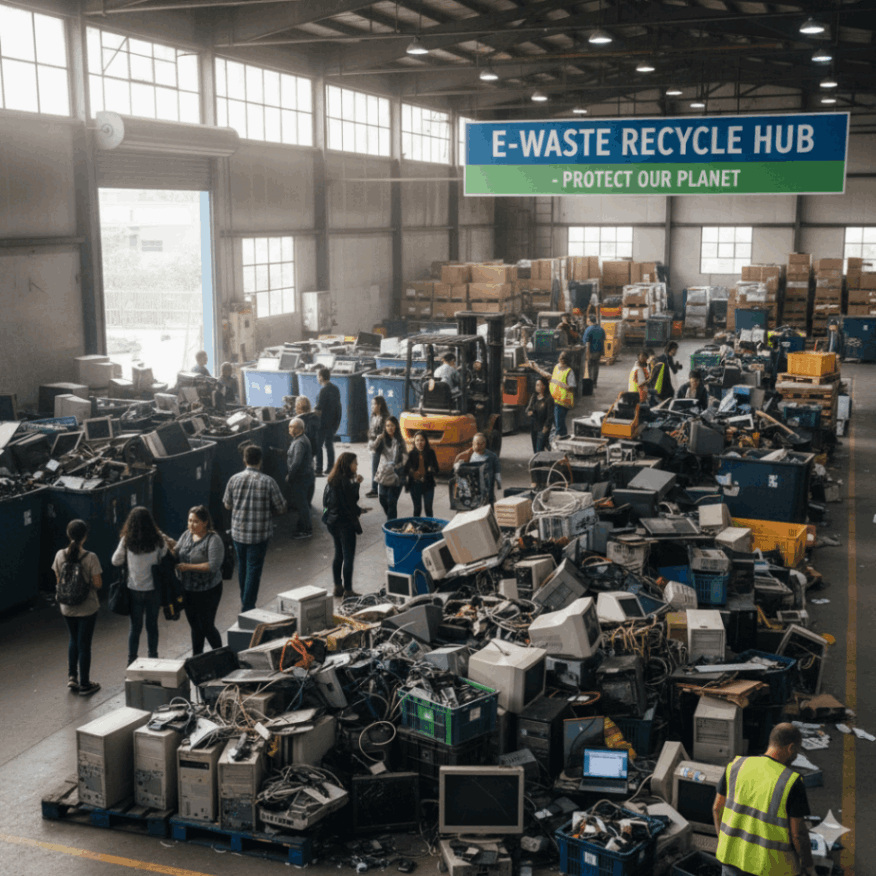
Electronic waste, or e-waste, is one of the fastest-growing waste streams in the world. With the increasing demand for technology, billions of electronic devices are discarded every year. From old smartphones and laptops to broken televisions and appliances these devices contain not only hazardous materials but also valuable resources.
E-waste to energy (E-WtE) is an innovative approach that transforms electronic trash into a valuable energy source. By using advanced recycling and energy recovery technologies, this process helps reduce landfill waste, curb pollution, and generate electricity contributing to a circular and sustainable economy.
Understanding E-Waste: A Global Challenge
E-waste includes discarded electrical or electronic devices such as:
-
Mobile phones
-
Computers and peripherals
-
Household appliances
-
Audio and video equipment
-
Electric tools and toys
Global E-Waste Statistics
| Year | Estimated Global E-Waste (Million Tons) | Recycled (%) | Unrecycled (%) |
|---|---|---|---|
| 2020 | 53.6 | 17.4 | 82.6 |
| 2023 | 61.3 | 20.2 | 79.8 |
| 2030 (Projected) | 75.0 | 25.0 | 75.0 |
(Source: United Nations Global E-Waste Monitor)
With less than 20% of e-waste properly recycled, the remaining ends up in landfills or informal recycling centers, causing severe soil and water contamination from toxic elements like lead, mercury, and cadmium.
What Is E-Waste to Energy?
E-Waste to Energy (E-WtE) refers to the process of converting discarded electronic materials into usable forms of energy such as electricity, heat, or fuel.
This is achieved through a combination of mechanical separation, thermal treatment, and advanced chemical recovery methods.
Core Process
-
Collection and Sorting:
E-waste is gathered and separated into different material categories plastics, metals, and glass. -
Pre-Treatment:
Hazardous materials like batteries and mercury lamps are safely removed. -
Energy Conversion:
Techniques such as pyrolysis, gasification, or incineration are used to extract energy. -
Power Generation:
The recovered energy is used to generate electricity and heat, often fed back into local grids or industrial systems.
Technologies Powering E-Waste to Energy
E-WtE involves several cutting-edge technologies. Below are the most effective methods used globally:
| Technology | Description | Energy Output | Environmental Impact |
|---|---|---|---|
| Incineration | Burning e-waste at high temperatures to produce heat and electricity | High | Moderate (requires filters) |
| Gasification | Converts organic materials into syngas (CO + H₂) for power generation | Medium to High | Low (cleaner process) |
| Pyrolysis | Thermal decomposition in the absence of oxygen, producing oil and gas | Moderate | Low |
| Plasma Arc Treatment | Uses plasma torches to decompose waste at extremely high temperatures | High | Very Low |
Each of these methods helps recover both energy and valuable materials, reducing dependency on raw resource extraction.
Environmental and Economic Benefits
Transforming e-waste into energy provides multiple environmental, economic, and social benefits:
1. Environmental Advantages
-
Reduced landfill waste: Minimizes toxic waste accumulation.
-
Lower greenhouse gas emissions: Cleaner energy recovery compared to fossil fuels.
-
Conservation of resources: Recovers metals like copper, aluminum, and gold.
2. Economic Benefits
-
Energy generation revenue: Facilities can sell electricity back to the grid.
-
Job creation: Opportunities in collection, processing, and energy sectors.
-
Material recovery value: Reclaimed metals and components are resold for profit.
3. Sustainable Development Alignment
The E-WtE approach directly supports the United Nations Sustainable Development Goals (SDGs), particularly:
-
SDG 7: Affordable and Clean Energy
-
SDG 11: Sustainable Cities and Communities
-
SDG 12: Responsible Consumption and Production
-
SDG 13: Climate Action
Challenges in Implementing E-Waste to Energy
Despite its advantages, there are challenges that must be addressed for large-scale adoption:
| Challenge | Description | Potential Solution |
|---|---|---|
| High Initial Cost | Setting up E-WtE plants requires heavy investment | Public-private partnerships & green financing |
| Toxic Emissions | Inadequate processing can release harmful gases | Advanced filtration & emission control systems |
| Regulatory Gaps | Weak e-waste management policies | Stronger environmental regulations & enforcement |
| Collection Inefficiency | Lack of formal e-waste collection infrastructure | Incentivized recycling programs |
Global Initiatives and Case Studies
1. Sweden: A Circular Waste Management Model
Sweden recycles over 99% of its waste, with E-WtE plants producing district heating for thousands of homes. The nation has effectively eliminated landfills through energy recovery and recycling integration.
2. Japan: Technological Innovation in E-Waste Recycling
Japan’s e-waste policies mandate producer responsibility, ensuring manufacturers take back used electronics. Through pyrolysis and plasma technologies, Japan converts waste plastics and metals into clean energy and raw materials.
3. India: Emerging E-Waste to Energy Potential
India generates over 3 million tons of e-waste annually. The government is investing in urban mining and waste-to-energy plants to tackle pollution and generate renewable power.
For an in-depth look at global sustainability efforts, check out Sustainable Finance and Green Investments on FintechZoomiOM.
The Role of Policy and Innovation
Governments and private companies play a crucial role in driving E-WtE forward.
Key steps include:
-
Extended Producer Responsibility (EPR): Forcing manufacturers to manage e-waste responsibly.
-
Green Financing: Encouraging banks and fintechs to support eco-innovation.
-
Public Awareness: Educating consumers on recycling benefits.
-
Smart Infrastructure: Using AI and IoT for waste tracking and sorting optimization.
Fintech can also play a part. Explore how Green Fintech Solutions are supporting sustainability-driven industries.
Future Outlook
The future of E-Waste to Energy is promising. With the advancement of AI-powered sorting systems, blockchain-based recycling tracking, and decentralized micro-energy grids, waste management is entering a smarter era.
By 2035, it’s expected that over 40% of global e-waste will be repurposed through energy and material recovery technologies.
Countries that embrace these solutions today will lead the world in energy innovation and environmental preservation tomorrow.
(FAQ)
1. What is the main advantage of e-waste to energy conversion?
It allows us to generate clean energy while minimizing the negative environmental impact of discarded electronics.
2. Is e-waste to energy sustainable?
Yes. When managed properly, it forms part of a circular economy, recovering both materials and energy.
3. Does e-waste to energy release harmful emissions?
Modern plants use advanced emission controls that make the process significantly cleaner than traditional incineration.
4. Can small countries benefit from E-WtE?
Absolutely. Smaller nations can build modular, decentralized plants that support local energy grids and reduce import dependence.
5. How does E-WtE relate to renewable energy?
It complements renewables like solar and wind by providing consistent, base-load energy from non-recyclable waste.
Conclusion
E-Waste to Energy represents a bold step toward sustainable waste management and renewable energy generation. It transforms one of the world’s biggest environmental challenges into a source of opportunity and innovation.
As technology advances, partnerships between governments, fintech sectors, and environmental organizations can accelerate the shift toward a cleaner, energy-positive planet.