Introduction
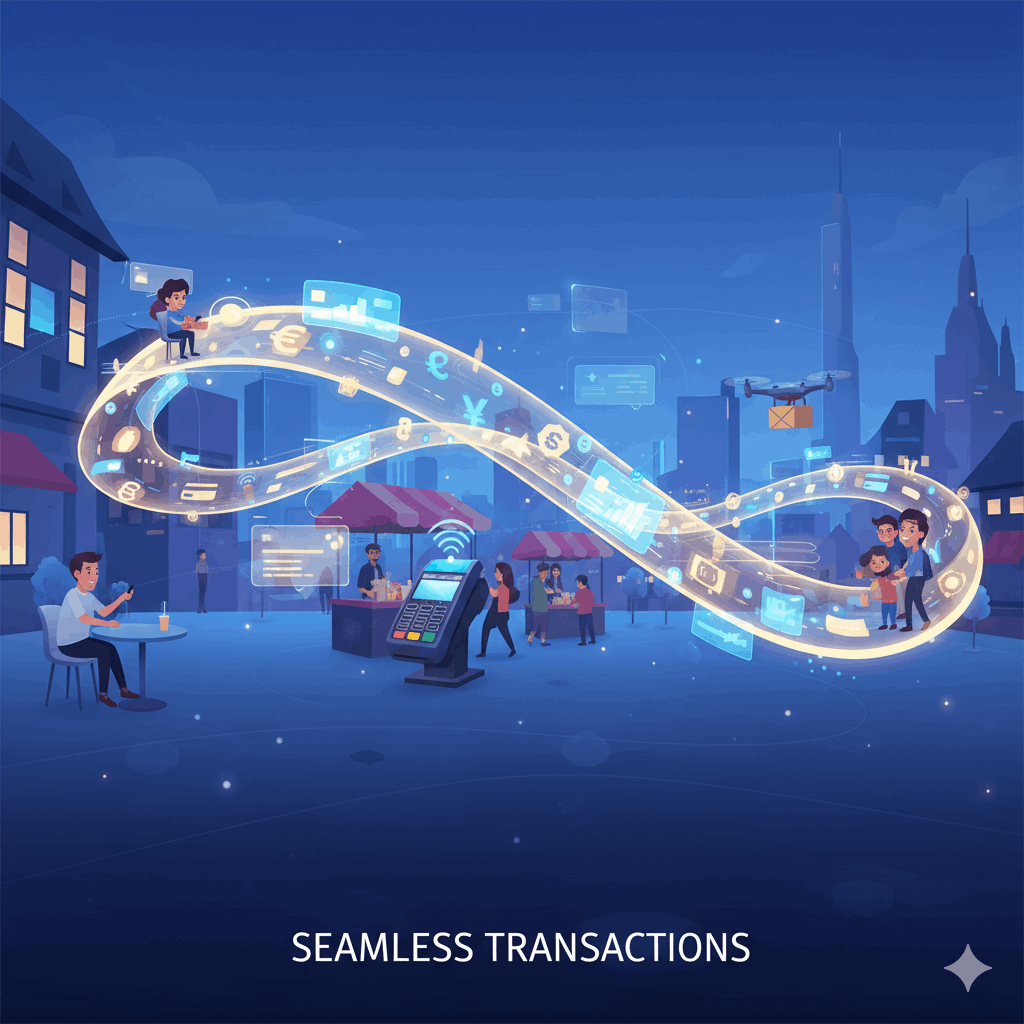
As financial technology advances, payments are becoming invisible happening behind the scenes, effortlessly and automatically. From Amazon Go stores to Uber rides, invisible payments eliminate the traditional act of paying, creating a frictionless and personalized consumer experience.
This article explores the technology, evolution, benefits, and challenges of invisible payments while highlighting how they are redefining trust and convenience in modern financial ecosystems.
What Are Invisible Payments?
Invisible payments refer to financial transactions that occur without explicit user interaction at the point of sale. The payment process is automated, usually initiated and completed by digital systems once the transaction criteria are met.
Examples Include:
-
Ride-hailing apps like Uber or Careem, where payment happens automatically after the trip ends.
-
Amazon Go stores, where customers walk out without checking out manually.
-
Subscription-based models such as Spotify or Netflix.
Invisible payments rely on technologies such as:
-
Artificial Intelligence (AI) for predictive and contextual transactions.
-
Internet of Things (IoT) to connect smart devices with payment gateways.
-
Tokenization and blockchain for secure, automated authorization.
The Evolution of Payment Systems
| Payment Phase | Characteristics | Examples |
|---|---|---|
| Cash Era | Tangible, physical exchange | Coins, notes |
| Card Era | Plastic-based convenience | Credit/Debit cards |
| Digital Era | Online and mobile payments | PayPal, Apple Pay |
| Invisible Era | No explicit action, seamless flow | Amazon Go, Uber, IoT-based payments |
The transition toward invisible payments is a natural evolution in the quest for speed, convenience, and personalization.
How Invisible Payments Work
Invisible payments operate through background authentication and continuous digital identity verification. Here’s a simplified flow:
-
User onboarding: Customers link payment credentials to a service or device.
-
Behavioral tracking: Systems learn spending patterns or contextual triggers.
-
Transaction initiation: Payment is triggered automatically based on context (e.g., walking out of a store).
-
Authentication: Biometric or token-based security confirms identity.
-
Settlement: Funds are transferred seamlessly without user intervention.
This framework integrates machine learning, biometric authentication, and IoT sensors to ensure trust and security while maintaining a fluid experience.
The Psychology Behind Seamless Transactions
Invisible payments are not just about speed—they reshape consumer psychology.
Key Psychological Impacts:
-
Reduced pain of paying: Users feel less financial friction when they don’t manually initiate payments.
-
Increased spending tendency: Automatic payments can subtly encourage more purchases.
-
Enhanced satisfaction: Quick, smooth experiences increase loyalty and trust.
However, transparency and control remain crucial to prevent overspending or ethical concerns.
For deeper insights into behavioral finance, see our related article:
👉 How the Brain Makes Money Decisions.
Technologies Powering Invisible Payments
Invisible payments rely on multiple technological ecosystems working together.
| Technology | Role in Invisible Payments |
|---|---|
| AI & Machine Learning | Predicts user intent and automates approvals |
| Blockchain | Enhances transaction transparency and security |
| IoT Devices | Enable contextual payments via connected systems |
| Biometric Authentication | Verifies identity seamlessly |
| Cloud APIs | Facilitate integration across devices and platforms |
These technologies together ensure security, personalization, and instant settlement, making invisible payments viable and scalable.
Benefits of Invisible Payments
1. Frictionless Customer Experience
Payments happen automatically, improving satisfaction and retention.
2. Operational Efficiency
Businesses save time and reduce checkout bottlenecks.
3. Data-Driven Insights
Invisible payments produce rich behavioral data for personalization.
4. Reduced Human Error
Automation minimizes manual mistakes and payment delays.
5. Enhanced Security
With tokenization and biometrics, fraud detection becomes faster and smarter.
Challenges and Risks
Despite their benefits, invisible payments face security, ethical, and technical challenges.
| Challenge | Description | Potential Solution |
|---|---|---|
| Privacy Concerns | Continuous data tracking raises ethical issues | Transparent data policies |
| Security Risks | Automated systems can be targets for hackers | Advanced encryption and blockchain |
| Loss of User Control | Users may lose awareness of spending | User-friendly dashboards and alerts |
| Regulatory Compliance | Varying regional laws affect deployment | Collaboration with fintech regulators |
To explore how blockchain enhances trust in such systems, read:
👉 Cognitive Trust and Blockchain: How Transparency Changes Investor Psychology.
The Future of Invisible Payments
The future of payments lies in contextual intelligence and personalization. As AI-driven assistants, IoT devices, and digital identity systems mature, invisible payments will integrate into daily routines from smart fridges reordering groceries to autonomous cars paying for tolls.
Expected Trends:
-
Voice-activated transactions through virtual assistants.
-
Predictive payments powered by AI behavior analytics.
-
Embedded finance within non-financial platforms.
-
Cross-border invisible payments using blockchain rails.
Regulatory and Ethical Considerations
As payment invisibility grows, regulators and consumers demand stronger accountability.
Key Areas of Focus:
-
Consent frameworks to ensure users know when payments occur.
-
Data protection laws like GDPR and PCI DSS compliance.
-
Ethical AI use for non-biased automation.
Businesses adopting invisible payments must maintain transparency and user empowerment to build long-term trust.
Business Opportunities in Invisible Payments
Industries Poised for Growth:
| Sector | Application Example |
|---|---|
| Retail | Walk-out shopping with automated checkout |
| Transportation | Toll and fuel payments via smart sensors |
| Hospitality | Hotel check-ins and dining payments via wearables |
| Healthcare | Automated billing through connected systems |
| Smart Homes | IoT-based reordering and subscriptions |
How Fintech Startups Can Leverage It:
-
Develop API-driven payment solutions.
-
Focus on secure identity verification systems.
-
Integrate AI analytics for contextual insights.
Case Study: Amazon Go
Amazon Go is a prime example of invisible payments in action. Using computer vision, AI, and sensor fusion, the store detects items customers pick up and charges them automatically upon exit.
This model eliminates queues and cashiers, showcasing the power of seamless automation in retail environments.
FAQs
1. What are invisible payments?
Invisible payments are transactions completed automatically without manual input, using pre-stored credentials and digital authorization systems.
2. Are invisible payments secure?
Yes. They use tokenization, biometric authentication, and blockchain to maintain strong data security.
3. How do invisible payments benefit consumers?
They save time, reduce friction, and provide a smoother, faster checkout experience.
4. What are the risks of invisible payments?
Risks include data privacy concerns, overspending, and potential misuse of personal information.
5. Which industries will benefit most?
Retail, transportation, hospitality, and healthcare will see major growth through automated, frictionless transactions.
Conclusion
Invisible payments mark a pivotal shift in fintech evolution, blending convenience, intelligence, and security into one seamless experience. The future of payments is not just digital it’s disappearing into the background, transforming how consumers and businesses interact financially.
As the world moves toward this frictionless reality, transparency, trust, and technology integration will define the winners in the invisible payment revolution.