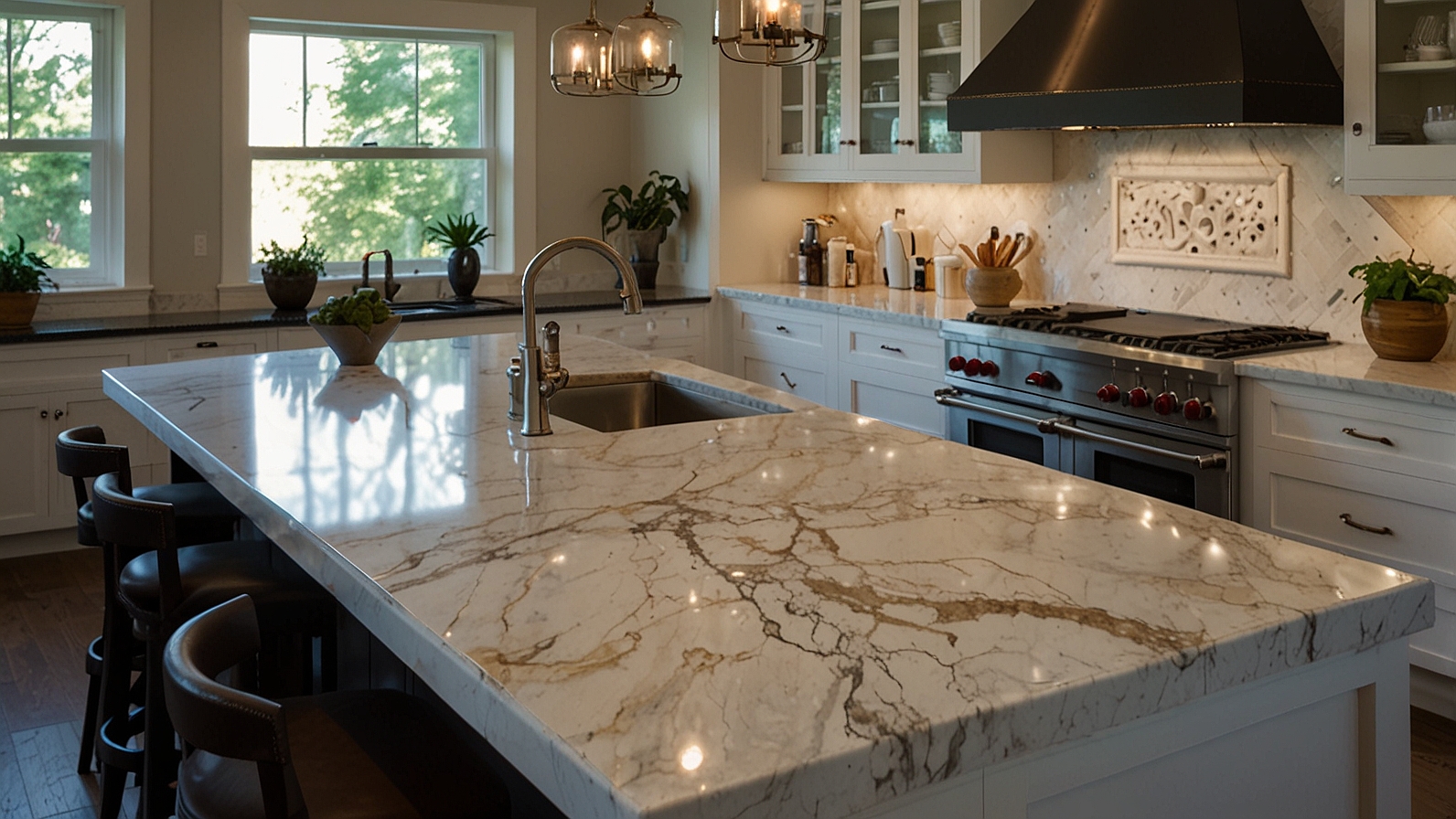
Prefabricated quartz countertops are pre-cut, factory-finished quartz slabs designed to simplify installation and reduce costs. They come in standard sizes and shapes, making them a practical choice for many kitchen and bathroom layouts without sacrificing the quality or durability of premium quartz. They offer a balance of elegance, durability, and affordability by streamlining the preparation process and minimizing material waste.
These countertops often include matching backsplashes and edge finishes, providing a complete, polished look right out of the box. Since they are made to industry standards, they offer quick availability and can significantly reduce project turnaround times. This makes prefabricated quartz an attractive option for homeowners looking to upgrade their surfaces efficiently and reliably.
With a wide variety of colors and patterns available, including natural stone looks like marble, these countertops can fit diverse design preferences. While customization options are more limited than fully custom slabs, installers can still adjust these pieces to fit specific spaces, balancing convenience with tailored functionality.
Overview of Pre Fabricated Quartz Countertops
Pre fabricated quartz countertops offer a cost-effective and efficient solution without sacrificing durability or style. These countertops come in standardized sizes and finished edges, making them quick to install and widely available.
Definition and Features
Pre fabricated quartz countertops are pre-cut and pre-finished pieces of engineered quartz designed to fit common dimensions, typically for kitchens or bathrooms. They are manufactured with consistent thickness options, usually ranging from 1.2 cm to 3 cm.
These countertops feature polished, factory-finished edges, which reduce the need for on-site customization. Available in over 40 colors and patterns, including options that mimic marble, they provide versatile design choices.
Because they are mass-produced, they minimize material waste and labor costs, making them an affordable alternative to custom slabs. They also retain quartz’s inherent benefits like durability, scratch resistance, and low maintenance.
Comparison With Custom Quartz Countertops
Custom quartz countertops are tailor-made to fit unique dimensions and design preferences, offering a wider range of colors, patterns, and thicknesses. In contrast, prefabricated options come in fixed sizes with limited customization, which can restrict design flexibility.
Custom slabs usually cost more due to the fabrication time and personalized fitting, while prefab pieces typically range between $50 and $120 per square foot. Prefab quartz counters reduce turnaround time and installation complexity but may have visible seams or less intricate edge profiles.
Though prefab counters offer durability and style close to custom slabs, they lack the precise fit and extensive design variety found in slabs. Buyers prioritizing budget and quick installation often prefer prefabricated options.
Popular Applications
Pre fabricated quartz countertops are commonly used in residential kitchens and bathrooms due to their balance of affordability and durability. They suit standard layouts, such as straight counters, islands, and peninsula configurations, where dimensions fit the prefab sizes.
They are favored in remodeling projects aiming to update surface material quickly and cost-effectively. Commercial spaces with frequent turnover may also select prefabricated quartz for its ease of replacement and maintenance.
Because of their polished finish and variety of patterns, these countertops work well in settings seeking a high-end look without the full expense or lead time of custom fabrication. They are also practical for rental properties and short-term installations.
Installation and Maintenance
Pre fabricated quartz countertops require specific steps for installation and ongoing care to maintain their appearance and durability. Understanding the installation process, budget considerations, and proper cleaning methods ensures the countertops perform well over time.
Installation Process
Pre fabricated quartz countertops arrive in standard sizes, which limits customization but speeds up installation.
The countertop should be acclimated in the installation space for 24 hours to avoid temperature-related issues. Installation requires a flat, level cabinet surface and precise measurements to fit the pre cut slabs properly.
Using specialized adhesives and silicone caulking designed for quartz is crucial for secure attachment and seam sealing. Given the weight of quartz, it is advised to have at least two people handle the installation.
Cutting or modifying pre fabricated quartz on-site is generally avoided to maintain integrity and avoid damage. Final sealing is typically not necessary because quartz is non-porous, but sealing of joints may be applied for cosmetic purposes.
Cost Factors and Budget Considerations
Labor typically constitutes a significant part of the total cost despite the reduced fabrication time with pre fabricated quartz.
Material costs vary based on slab finish, color, and brand, with more uniform colors and popular patterns often less expensive than unique or exotic designs.
Additional costs may include edge treatments, cutouts for sinks or cooktops, and removal of old countertops.
Transportation and delivery fees can add to the budget, especially for heavier or bulkier slabs.
Budgeting should also account for preparatory work like cabinet repairs or adjustments to ensure proper fit.
Cleaning and Care Tips
Quartz countertops are low maintenance but require regular cleaning to maintain their appearance.
Use a soft cloth or sponge with mild soap and warm water for daily cleaning. Avoid harsh chemicals, bleach, or abrasive cleaners, as they may dull the surface.
Spills should be wiped up promptly to prevent potential staining, especially from highly pigmented liquids like wine or coffee.
Heat protection is important; use trivets or heat pads under hot pans to avoid thermal shock or discoloration.
Avoid cutting directly on quartz surfaces to prevent scratches; always use a cutting board.