Introduction
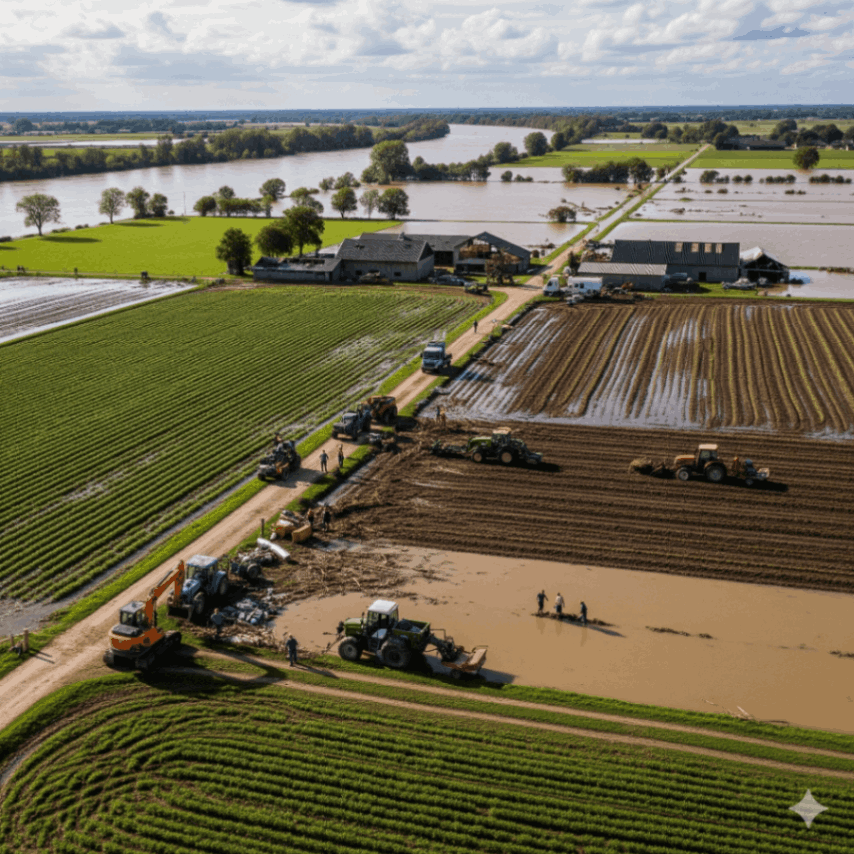
Climate change is reshaping global agriculture, and developing countries like Pakistan face devastating impacts from floods and extreme weather events. Farmers, particularly smallholders, often lose not only crops but also their livelihoods when disaster strikes. In recent years, agritech and fintech innovations have emerged as powerful tools to help farmers recover quickly, reduce risks, and build long-term resilience.
This article explores the intersection of agritech, fintech, and disaster recovery, showing how financial technologies empower farmers to bounce back after floods and climate shocks.
The Impact of Floods on Farmers
Floods destroy crops, soil fertility, and essential infrastructure. For small farmers, this means immediate income loss and long-term uncertainty.
Key Challenges Farmers Face After Floods:
-
Crop and livestock loss destruction of standing crops and death of animals.
-
Soil degradation reduced fertility and increased salinity.
-
Debt cycles reliance on informal loans at high-interest rates.
-
Lack of insurance most small farmers remain uninsured.
-
Market disruptions damaged roads, transport, and supply chains.
According to the World Bank, agricultural losses due to floods and other natural disasters exceed $280 billion globally each year. For developing countries, the recovery gap is even wider due to poor access to finance and digital tools.
Role of Agritech & Fintech in Flood Recovery
Modern fintech platforms combined with agritech solutions are providing digital pathways for farmers to recover faster. These technologies ensure financial inclusion, access to credit, insurance, and smart decision-making tools.
How Fintech Supports Farmers After Climate Disasters:
Microloans and Digital Credit
Mobile-based credit helps farmers rebuild quickly.
Digital lending platforms assess risk using satellite and farm data.
Blockchain-Based Transparency
Ensures aid distribution and relief funds reach farmers without corruption.
Creates trust between NGOs, governments, and farmers.
Insurance and Risk Management
Weather-indexed crop insurance provides quick payouts after disasters.
Insurtech companies automate claim verification using satellite images.
Mobile Banking & Wallets
Farmers can receive disaster aid directly into their mobile wallets.
Reduces dependency on middlemen and informal lenders.
Agritech Data & Forecasting
-
-
AI-driven platforms predict flood risks.
-
Drones and IoT sensors assess post-flood soil and crop damage.
-
Case Study: Pakistan Floods 2022
The 2022 Pakistan floods submerged one-third of the country, affecting over 33 million people. Farmers lost billions in crops, livestock, and infrastructure.
-
Challenge: Lack of quick financial support left farmers struggling.
-
Fintech Response: Mobile banking apps like Easypaisa and JazzCash became crucial in delivering aid and microloans.
-
Agritech Role: Satellite mapping helped identify damaged farmland for targeted relief.
This real-world example highlights how digital finance and agritech collaboration can reduce the recovery gap for vulnerable communities.
Table: Fintech Tools for Flood Recovery
| Fintech Solution | How It Helps Farmers | Example |
|---|---|---|
| Mobile Microloans | Provides instant credit for replanting crops | Branch, Easypaisa |
| Blockchain Aid Distribution | Ensures transparent relief fund allocation | Binance Charity, UN Blockchain Pilot |
| Weather-Indexed Insurance | Quick payouts based on rainfall/flood triggers | Pula Insurance, ACRE Africa |
| Digital Wallets & Payments | Farmers receive aid directly in wallets | JazzCash, M-Pesa |
| AI & Satellite Data | Damage assessment for insurance and aid delivery | CropIn, AgriSense |
These related articles enhance interlinking strategy and SEO performance.
Global Examples of Agritech in Flood Recovery
-
India: The government partnered with fintech startups to provide Kisan Credit Cards through digital apps, giving farmers quick access to loans post-flood.
-
Kenya: Mobile money platform M-Pesa allowed rapid cash transfers during drought and floods, ensuring farmers had liquidity.
-
Bangladesh: Flood-prone regions benefited from blockchain-based land records to protect property rights.
Such examples show that fintech-driven resilience is scalable across multiple regions.
Long-Term Benefits of Fintech in Agricultur
Financial Inclusion Even remote farmers access loans, savings, and payments.
-
Resilience Building Farmers recover faster from disasters.
-
Trust & Transparency Blockchain reduces corruption in relief funds.
-
Data-Driven Decisions Agritech forecasts reduce future risks.
-
Climate Adaptation Smart farming techniques lower vulnerability.
FAQ Section
1. How does fintech help farmers after floods?
Fintech provides farmers with instant loans, insurance payouts, and digital wallets, allowing quick recovery from losses.
2. What role does blockchain play in flood recovery?
Blockchain ensures transparent and tamper-proof distribution of relief funds, reducing corruption and delays.
3. Can farmers in rural areas use fintech easily?
Yes. With rising mobile penetration in countries like Pakistan, even remote farmers can use mobile wallets and digital banking apps.
4. Are there successful case studies of fintech in disaster recovery?
Yes. During the 2022 Pakistan floods, platforms like Easypaisa and JazzCash enabled rapid cash transfers to farmers.
5. How do agritech tools help in future flood prevention?
Agritech tools like AI forecasting, satellite mapping, and IoT sensors help predict floods and minimize damage through early warnings.
Conclusion
Floods and climate disasters will continue to challenge global agriculture. However, the combination of agritech and fintech offers hope for millions of farmers. From digital microloans to blockchain transparency and AI-powered risk assessments, these solutions empower farmers to recover faster and build long-term resilience.
As Pakistan and other developing nations face recurring floods, adopting fintech-driven agritech strategies is no longer optional it is essential for survival.