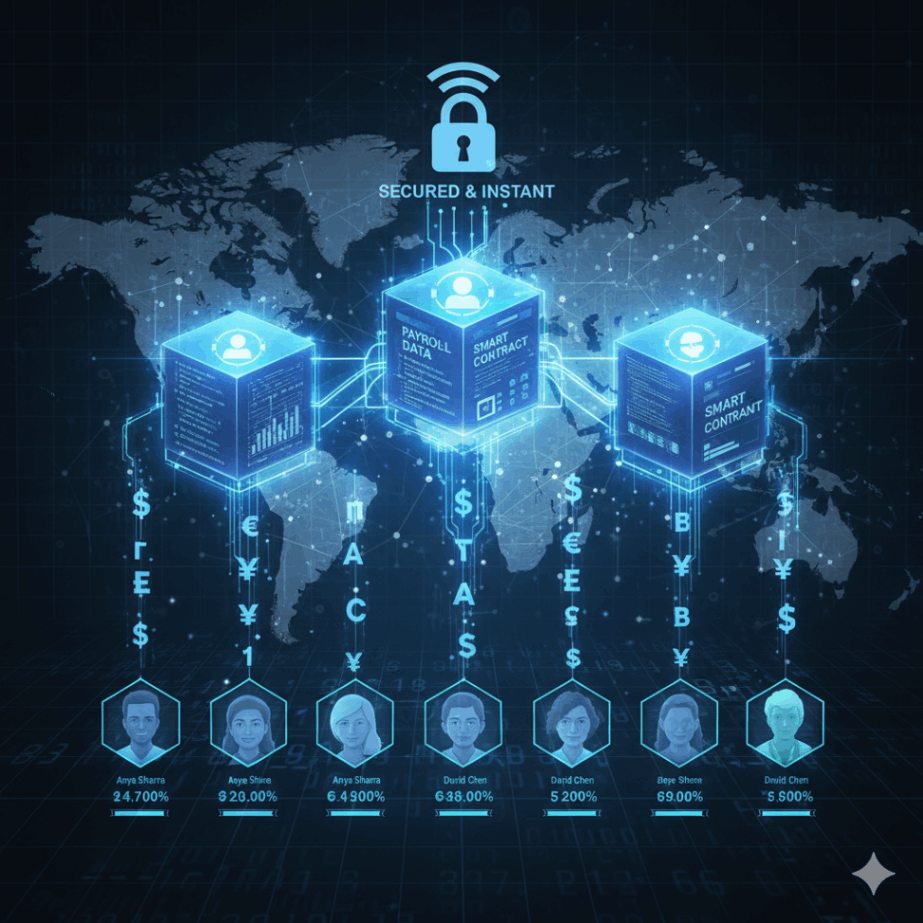
Introduction
In an era where remote work has become the global standard, businesses are facing new challenges in managing payroll across borders. Traditional payment systems are often slow, expensive, and complicated by currency exchange rates and banking restrictions.
Enter crypto payroll systems blockchain-powered platforms that streamline salary payments in digital currencies like Bitcoin (BTC), Ethereum (ETH), or stablecoins (USDT, USDC).
This new wave of fintech innovation allows companies to pay employees anywhere in the world within minutes, eliminating intermediaries and reducing operational costs.
What Are Crypto Payroll Systems?
A crypto payroll system is a digital payment infrastructure that allows companies to distribute employee salaries in cryptocurrencies.
Instead of using traditional banks or payment gateways, these systems use blockchain networks to send payments directly to employees’ crypto wallets.
Core Features:
-
Instant Payments: Near-instant transfers, regardless of location.
-
Global Accessibility: Works seamlessly across borders.
-
Transparency: Immutable blockchain records.
-
Reduced Fees: Minimal or no banking fees.
-
Smart Contracts: Automate payroll distribution and taxation.
Why Remote Teams Are Adopting Crypto Payroll
The global workforce is becoming increasingly decentralized. Companies now hire developers, designers, marketers, and writers from different continents.
Here’s why crypto payroll systems are ideal for remote-first companies:
1. Fast Cross-Border Payments
Traditional international transfers can take 3 7 business days and include multiple intermediaries.
Crypto transactions, however, complete within minutes 24/7, including weekends.
2. Cost Efficiency
Bank transfers often include exchange rate fees, SWIFT charges, and intermediary bank deductions.
With crypto, companies only pay a small transaction fee on the blockchain sometimes less than $1.
3. Financial Inclusion
Many remote workers in developing countries lack access to traditional banking.
Crypto payroll allows them to receive payments directly to a digital wallet, accessible via smartphone.
4. Protection Against Inflation
Paying employees in stablecoins like USDC or DAI helps preserve value in countries suffering from currency devaluation.
5. Transparency and Accountability
Each transaction is recorded on the blockchain, making auditing and tracking simple and tamper-proof.
Comparison: Traditional vs. Crypto Payroll
| Feature | Traditional Payroll | Crypto Payroll |
|---|---|---|
| Speed | 3–7 business days | Instant (minutes) |
| Cost | High transaction & conversion fees | Low blockchain fees |
| Accessibility | Bank accounts required | Wallet-based (global access) |
| Transparency | Opaque bank processes | Public blockchain records |
| Compliance | Region-specific | Smart contract-based automation |
| Currency Risk | Prone to inflation & forex loss | Can use stablecoins |
Leading Crypto Payroll Platforms (2025 Edition)
Here are some of the most reliable crypto payroll platforms currently helping remote teams and businesses streamline payments:
| Platform | Key Features | Supported Cryptos | Website |
|---|---|---|---|
| Bitwage | Hybrid fiat & crypto payroll, invoicing, tax reports | BTC, ETH, USDC | bitwage.com |
| Deel Crypto | Global payroll compliance, supports stablecoins | USDC, USDT | deel.com |
| Request Finance | Invoicing, expense management, DeFi integrations | 150+ tokens | request.finance |
| Papaya Global | Crypto payroll via partnerships | Multiple | papayaglobal.com |
| OnfidoPay | Identity-verified crypto payroll with smart contracts | BTC, ETH, BNB | onfidopay.com |
(Note: Always verify KYC and tax compliance before selecting a platform.)
Compliance and Taxation Challenges
While crypto payroll offers convenience, companies must still comply with employment laws, KYC/AML regulations, and tax obligations in both the employer’s and employee’s jurisdictions.
1. Regulatory Uncertainty
Different countries classify crypto assets differently as property, currency, or securities.
Employers must consult local authorities or compliance partners.
2. Tax Reporting
In most regions, salaries paid in crypto are still taxable as income.
Companies should:
-
Record the fiat value of crypto at payment time.
-
Provide income statements with equivalent local currency values.
-
Maintain transaction histories for audits.
3. Volatility Management
The value of cryptocurrencies can fluctuate quickly.
Using stablecoins (USDT, USDC, DAI) is the best strategy for stable salaries.
How to Set Up a Crypto Payroll System for Remote Teams
Implementing a crypto payroll process requires careful planning and secure infrastructure.
Step 1: Select Payroll Tokens
Choose suitable crypto assets for salary distribution:
-
Stablecoins: USDC, USDT (low volatility)
-
Major coins: BTC, ETH (for tech-savvy teams)
Step 2: Choose a Payroll Platform
Select a trusted provider like Bitwage, Request Finance, or Deel that supports both fiat and crypto.
Step 3: KYC & Compliance
Ensure proper identity verification (KYC) and comply with AML (Anti-Money Laundering) regulations.
Step 4: Integrate Smart Contracts
Use smart contracts to automate:
-
Payment scheduling
-
Tax withholding
-
Bonus distribution
Step 5: Educate Employees
Train team members on:
-
Setting up digital wallets
-
Managing private keys
-
Converting crypto to fiat safely
Security Considerations
When managing payroll through crypto, security is paramount.
Recommended Practices:
-
Use multi-signature wallets for holding funds.
-
Store large amounts in cold wallets (offline).
-
Regularly audit smart contracts.
-
Partner with regulated exchanges for conversion.
-
Implement two-factor authentication (2FA) across systems.
Real-World Use Cases
1. Tech Startups
Remote-first blockchain startups pay developers directly in Ethereum or stablecoins, eliminating banking barriers.
2. Freelance Marketplaces
Platforms like Upwork and Fiverr are exploring crypto payment options to serve freelancers worldwide.
3. NGOs and Global Teams
International NGOs pay contractors in remote or unbanked areas using USDC, reducing overhead and enabling faster humanitarian response.
Advantages for Employers
-
Instant onboarding for global hires.
-
Reduced administrative workload.
-
Attractive to blockchain-native talent.
-
Improved transparency for audits and financial management.
-
24/7 payment flexibility.
Future of Crypto Payroll
As blockchain adoption expands and regulations mature, crypto payroll systems are poised to become the default global payment solution for remote teams.
With improvements in smart contracts, layer-2 networks, and CBDC integration, future systems may enable fully compliant, automated, and gas-free salary distribution.
Frequently Asked Questions (FAQ)
1. Is paying salaries in crypto legal?
Yes, in many countries it is legal, provided that taxation and reporting rules are followed. Always consult local regulations.
2. Which cryptocurrencies are best for payroll?
Stablecoins (USDT, USDC) are recommended because they maintain value stability.
3. How do employees convert crypto to fiat?
Employees can use regulated exchanges like Binance, Coinbase, or Kraken to convert crypto into local currency.
4. Can payroll be automated using smart contracts?
Yes, smart contracts can automate recurring payments, bonuses, and tax deductions.
5. What are the risks of crypto payroll?
-
Volatility in crypto prices
-
Compliance complexity
-
Wallet security risks
6. Can companies mix fiat and crypto payments?
Absolutely. Many firms use hybrid models part fiat, part crypto to balance convenience and compliance.
Conclusion
Crypto payroll systems are not just a technological novelty they’re a strategic advantage for global companies.
By combining speed, transparency, and cost efficiency, these systems empower businesses to operate borderlessly while offering employees more financial freedom.
As Web3 technology evolves, adopting crypto payroll isn’t just an innovation — it’s becoming a necessity for the global workforce.