Introduction
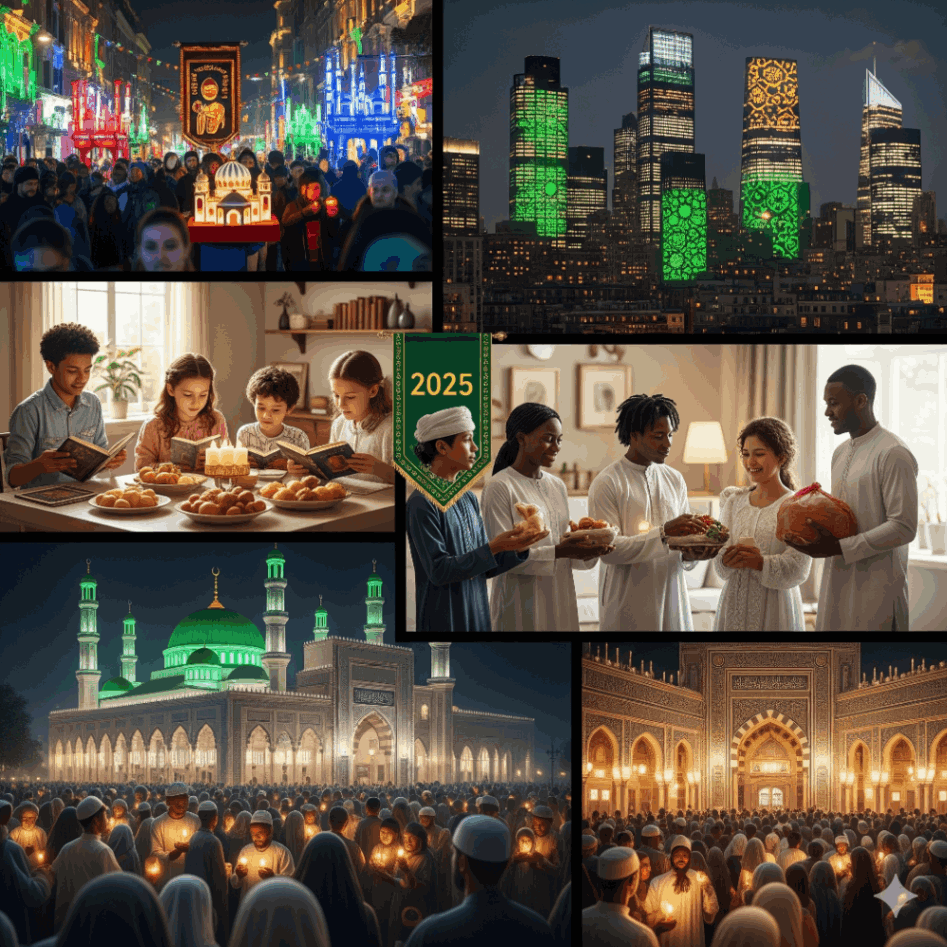
Rabi ul Awwal is the third month of the Islamic calendar, revered worldwide as the month in which the Prophet Muhammad (PBUH) was born. Milad-un-Nabi (Mawlid) is observed across cultures with gatherings, lectures, and expressions of love for the Prophet (PBUH). In 2025, as digital platforms continue to evolve, the role of technology in shaping global Milad celebrations has become more significant than ever before.
From online lectures to global livestreams, Muslims are embracing digital tools to connect, learn, and commemorate the Seerah of the Prophet (PBUH). This article explores how digital platforms are transforming Rabi ul Awwal 2025 celebrations, the challenges they bring, and the opportunities for greater outreach.
Why Digital Platforms Matter for Rabi ul Awwal 2025
Digital tools have become central to global Islamic practices, especially during significant months like Rabi ul Awwal. Key reasons include:
-
Accessibility: Muslims in remote areas can join live Milad events without geographical barriers.
-
Global Connection: Digital platforms unite communities across continents in real-time.
-
Educational Impact: Online lectures, courses, and e-books help people deepen their understanding of Seerah.
-
Youth Engagement: Social media ensures younger generations remain connected to Islamic traditions.
-
Inclusivity: Women, the elderly, and differently-abled individuals can actively participate in virtual gatherings.
Major Digital Trends in Rabi ul Awwal 2025
1. Live Streaming of Milad Gatherings
Many Islamic centers, mosques, and scholars are hosting YouTube, Facebook Live, and Zoom Milad sessions. These broadcasts reach millions globally, making traditional gatherings accessible to those unable to attend physically.
2. Islamic Mobile Applications
-
Apps like Muslim Pro, Quran Explorer, and Seerah-focused apps are providing daily Seerah reminders.
-
Event management apps are helping communities organize digital Milad programs efficiently.
3. Online Seerah Courses
Global Islamic institutes are launching short online Seerah courses during Rabi ul Awwal 2025. These include interactive classes with Q&A sessions and certifications.
4. Social Media Campaigns
Hashtags such as #Milad2025, #RabiulAwwal, and #SeerahLearning are trending, with Muslims sharing quotes, lectures, and reflections.
5. Virtual Reality (VR) and AI Tools
Emerging technologies like VR Islamic history experiences and AI-powered Islamic chatbots are being used to narrate Seerah stories interactively.
Comparison: Traditional vs. Digital Milad Celebrations
| Aspect | Traditional Milad | Digital Milad (2025) |
|---|---|---|
| Location | Physical gatherings in mosques/halls | Accessible globally via livestreams & apps |
| Accessibility | Limited to attendees | Open to anyone with internet access |
| Educational Resources | Speeches & books | E-books, podcasts, online courses |
| Audience Size | Hundreds to thousands | Millions worldwide |
| Interactivity | In-person Q&A | Live chats, comments, online discussions |
The Benefits of Digital Milad Celebrations
-
Global Reach: A speech delivered in Karachi can be heard in New York instantly.
-
Cost-Effective: Digital participation reduces travel and event costs.
-
Archiving: Events are recorded and uploaded for future access.
-
Youth Appeal: Engages young Muslims on platforms they already use daily.
Challenges of Digital Milad in 2025
Despite the opportunities, digital Milad celebrations face several challenges:
-
Misinformation: Unverified content about Seerah may spread quickly.
-
Authenticity Concerns: Not all digital scholars provide accurate knowledge.
-
Digital Divide: Poor internet access limits participation in some regions.
-
Over-commercialization: Some platforms may prioritize ad revenue over Islamic authenticity.
Role of Scholars and Institutions
Scholars and Islamic organizations are playing a crucial role in ensuring trustworthy, authentic, and accessible content. They are:
-
Hosting verified online Milad sessions.
-
Publishing Seerah-focused e-books and research papers.
-
Engaging in Q&A sessions to clarify doubts digitally.
-
Collaborating with universities and Islamic institutes to promote structured digital learning.
The Future of Digital Milad Celebrations
By 2030, with the rise of AI-driven Islamic learning platforms, Milad celebrations may become even more interactive and immersive. Digital tools will likely support multi-language live translations, enabling a truly global and unified commemoration of the Prophet’s (PBUH) birth.
Frequently Asked Questions (FAQ)
1. How is Rabi ul Awwal 2025 different from past celebrations?
In 2025, digital platforms like YouTube, Facebook Live, and Islamic apps have taken a central role, making global participation easier.
2. Are digital Milad celebrations authentic?
Yes, as long as they are conducted by verified scholars and institutions. Muslims should always rely on trusted sources.
3. Can rural communities participate in online Milad events?
Yes, provided they have internet access. Many NGOs are working to improve connectivity in underdeveloped areas.
4. What are the risks of digital Milad gatherings?
The main risks include misinformation, lack of scholarly oversight, and commercialization of religious content.
5. What digital tools are most popular during Rabi ul Awwal 2025?
Live streaming platforms (YouTube, Zoom), mobile apps, and online Islamic learning portals are most widely used.
Conclusion
Rabi ul Awwal 2025 demonstrates how digital platforms have revolutionized global Milad celebrations. With live streams, social media, apps, and online learning, Muslims worldwide can now participate in honoring the Prophet Muhammad (PBUH) regardless of geographical boundaries.
While challenges like misinformation exist, the benefits of global connectivity, accessibility, and knowledge-sharing far outweigh the drawbacks. Moving forward, digital platforms will continue to play a vital role in shaping Islamic observances, ensuring that the light of Seerah spreads across generations and geographies.