Introduction
The world of eCommerce is evolving rapidly, and one of the biggest game-changers in digital marketing today is voice commerce. With the increasing popularity of smart speakers like Amazon Alexa and Google Assistant, businesses must rethink their digital strategies to meet customer expectations.
According to Statista, over 8 billion voice assistants are expected to be in use by 2026. This surge presents a golden opportunity for marketers to tap into a new, hands-free shopping experience.
In this article, we’ll cover:
-
What voice commerce marketing is.
-
Why Alexa and Google Assistant are central to this shift.
-
Step-by-step optimization strategies.
-
Best practices and tools to succeed.
-
FAQs to clear common doubts.
For more insights on future fintech and digital transformation, explore our guide on Zero-Click Search Optimization.
What is Voice Commerce Marketing?
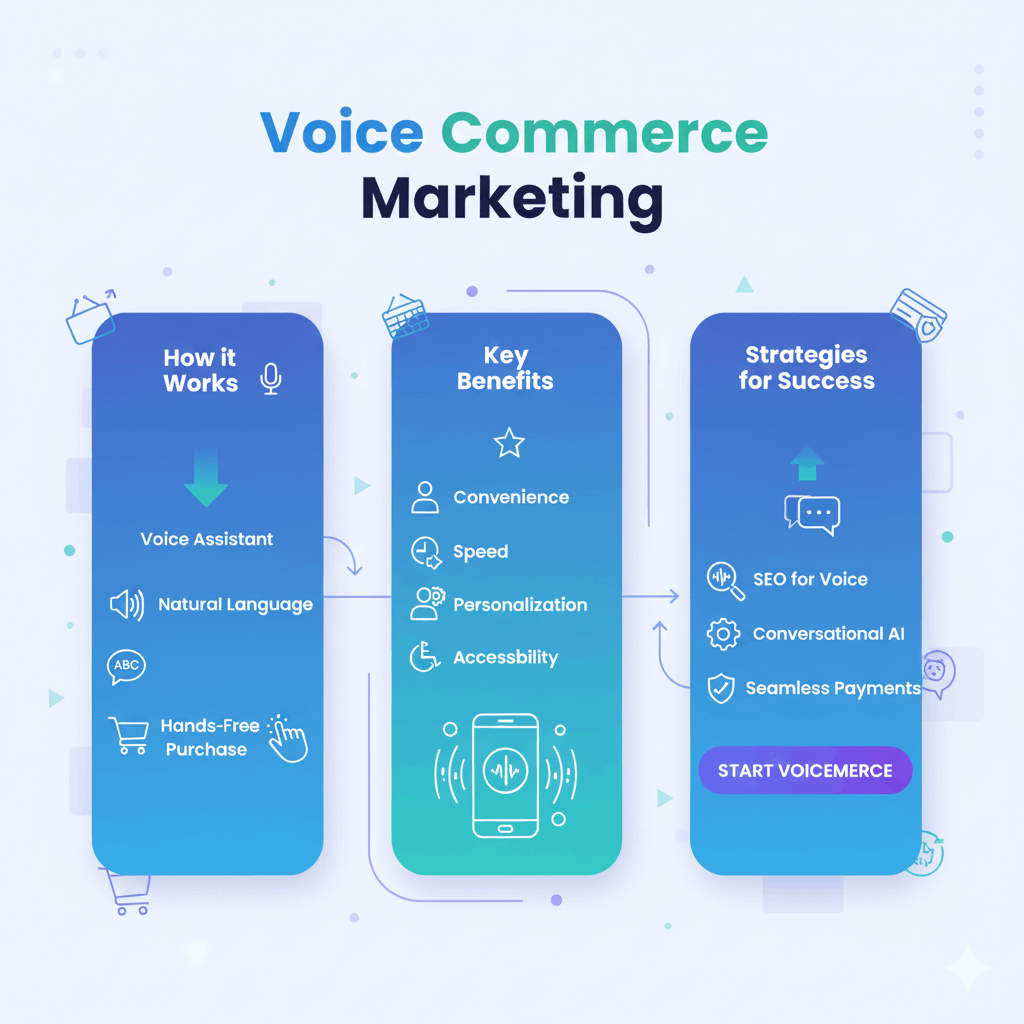
Voice commerce marketing refers to the strategies businesses use to make their products and services easily discoverable and purchasable through voice assistants like Alexa, Google Assistant, and Siri.
Instead of typing a query on Google, users simply say:
-
“Alexa, reorder my favorite coffee.”
-
“Hey Google, find me the best budget smartphone.”
This hands-free convenience makes shopping faster and more natural.
Why Alexa & Google Assistant Matter
Both Alexa and Google Assistant dominate the voice ecosystem. Here’s why they are critical for your marketing strategy:
| Feature | Amazon Alexa | Google Assistant |
|---|---|---|
| Market Share | Largest share of U.S. smart speaker market | Strong integration with Android ecosystem |
| Shopping Capability | Direct Amazon marketplace integration | Supports Google Shopping & third-party apps |
| Strengths | Voice-driven eCommerce, strong retail focus | Search-based queries, contextual results |
| Weaknesses | Limited to Amazon ecosystem for purchases | Less direct retail integration than Amazon |
By optimizing for both, brands ensure broader coverage of consumer preferences.
Benefits of Voice Commerce Marketing
Implementing voice strategies provides several competitive advantages:
-
Frictionless shopping experience Customers can purchase with simple voice commands.
-
Increased accessibility Helps visually impaired or multitasking users.
-
Personalized marketing AI assistants learn user preferences.
-
Early-mover advantage Few businesses fully optimize for voice, giving you a chance to stand out.
How to Optimize for Alexa & Google Assistant
Introduction
The world of eCommerce is evolving rapidly, and one of the biggest game-changers in digital marketing today is voice commerce. With the increasing popularity of smart speakers like Amazon Alexa and Google Assistant, businesses must rethink their digital strategies to meet customer expectations.
According to Statista, over 8 billion voice assistants are expected to be in use by 2026. This surge presents a golden opportunity for marketers to tap into a new, hands-free shopping experience.
In this article, we’ll cover:
-
What voice commerce marketing is.
-
Why Alexa and Google Assistant are central to this shift.
-
Step-by-step optimization strategies.
-
Best practices and tools to succeed.
-
FAQs to clear common doubts.
For more insights on future fintech and digital transformation, explore our guide on Zero-Click Search Optimization.
What is Voice Commerce Marketing?
Voice commerce marketing refers to the strategies businesses use to make their products and services easily discoverable and purchasable through voice assistants like Alexa, Google Assistant, and Siri.
Instead of typing a query on Google, users simply say:
-
“Alexa, reorder my favorite coffee.”
-
“Hey Google, find me the best budget smartphone.”
This hands-free convenience makes shopping faster and more natural.
Why Alexa & Google Assistant Matter
Both Alexa and Google Assistant dominate the voice ecosystem. Here’s why they are critical for your marketing strategy:
| Feature | Amazon Alexa | Google Assistant |
|---|---|---|
| Market Share | Largest share of U.S. smart speaker market | Strong integration with Android ecosystem |
| Shopping Capability | Direct Amazon marketplace integration | Supports Google Shopping & third-party apps |
| Strengths | Voice-driven eCommerce, strong retail focus | Search-based queries, contextual results |
| Weaknesses | Limited to Amazon ecosystem for purchases | Less direct retail integration than Amazon |
By optimizing for both, brands ensure broader coverage of consumer preferences.
Benefits of Voice Commerce Marketing
Implementing voice strategies provides several competitive advantages:
-
Frictionless shopping experience Customers can purchase with simple voice commands.
-
Increased accessibility Helps visually impaired or multitasking users.
-
Personalized marketing AI assistants learn user preferences.
-
Early-mover advantage Few businesses fully optimize for voice, giving you a chance to stand out.
How to Optimize for Alexa & Google Assistant
1. Focus on Conversational Keywords
Unlike traditional SEO, voice searches are longer and natural. Example:
-
Text search: “best budget laptop 2025”
-
Voice search: “What is the best budget laptop to buy in 2025 under $600?”
Tips:
-
Use question-based keywords (Who, What, Where, How).
-
Create FAQ pages to target these natural queries.
-
Include local SEO keywords like “near me” and city names.
2. Build Voice-Optimized Content
-
Use structured data (schema markup) to improve discoverability.
-
Create short, precise answers (30–40 words) for voice results.
-
Publish blogs with clear headings, bullets, and summaries.
For example, our post on Micro-Escrow for Freelance Gigs shows how niche content can attract voice-driven queries.
3. Optimize for Featured Snippets
Google Assistant often pulls answers from Position Zero. To increase chances:
-
Use tables, lists, and definitions.
-
Directly answer user intent at the start of each section.
-
Include step-by-step guides.
4. Enable Voice-Compatible Shopping
-
For Alexa, businesses can create Alexa Skills. Example: Starbucks lets users order coffee via voice.
-
For Google Assistant, integrate with Google Actions to enable voice-based purchases.
5. Improve Local SEO
Nearly 58% of consumers use voice search to find local businesses (Search Engine Journal).
-
Optimize Google Business Profile.
-
Include store hours, directions, and reviews.
-
Use location-based keywords in content.
6. Enhance Mobile Optimization
Since most Google voice searches happen on mobile, ensure your website is:
-
Mobile-first indexed.
-
Fast-loading (<3 seconds).
-
Secure with HTTPS.
Best Practices for Voice Commerce Marketing
-
Keep answers conversational and simple.
-
Leverage AI personalization to tailor shopping experiences.
-
Use omnichannel strategies (combine voice, search, social, and email).
-
Test your Alexa Skills & Google Actions frequently.
Future of Voice Commerce
Voice commerce is projected to exceed $80 billion in sales by 2028. Integration of AI-powered personalization, multi-language voice assistants, and seamless checkout systems will redefine customer expectations.
Companies investing in voice strategies now will secure a long-term competitive advantage.
FAQs: Voice Commerce Marketing
Q1: Is voice commerce only for large businesses?
No. Small businesses can benefit by optimizing local SEO, using conversational content, and integrating with marketplaces like Amazon.
Q2: How do I get my product featured on Alexa?
You need to sell through Amazon and optimize product descriptions with voice-friendly keywords.
Q3: Does Google Assistant show the same results as text search?
Not always. Google Assistant often prefers concise, snippet-style answers.
Q4: What industries benefit most from voice commerce?
Retail, food delivery, healthcare, financial services, and local businesses see the biggest gains.
Q5: How important is mobile optimization for voice search?
Extremely important. Most voice searches come from smartphones, so speed and usability are critical.
ConclusionVoice commerce marketing is no longer a futuristic concept it’s happening now. By optimizing for Alexa and Google Assistant, businesses can:
-
Enhance discoverability.
-
Drive seamless customer experiences.
-
Stay competitive in an evolving digital ecosystem.
The earlier you adapt, the more rewards you’ll reap. For more fintech and digital insights, check our guide on SMS-First Banking UX.
Unlike traditional SEO, voice searches are longer and natural. Example:
-
Text search: “best budget laptop 2025”
-
Voice search: “What is the best budget laptop to buy in 2025 under $600?”
Tips
-
Use question-based keywords (Who, What, Where, How).
-
Create FAQ pages to target these natural queries.
-
Include local SEO keywords like “near me” and city names.
2. Build Voice-Optimized Content
-
Use structured data (schema markup) to improve discoverability.
-
Create short, precise answers (30 40 words) for voice results.
-
Publish blogs with clear headings, bullets, and summaries.
For example, our post on Micro-Escrow for Freelance Gigs shows how niche content can attract voice-driven queries.
3. Optimize for Featured Snippets
Google Assistant often pulls answers from Position Zero. To increase chances:
-
Use tables, lists, and definitions.
-
Directly answer user intent at the start of each section.
-
Include step-by-step guides.
4. Enable Voice-Compatible Shopping
-
For Alexa, businesses can create Alexa Skills. Example: Starbucks lets users order coffee via voice.
-
For Google Assistant, integrate with Google Actions to enable voice-based purchases.
5. Improve Local SEO
Nearly 58% of consumers use voice search to find local businesses (Search Engine Journal).
-
Optimize Google Business Profile.
-
Include store hours, directions, and reviews.
-
Use location-based keywords in content.
6. Enhance Mobile Optimization
Since most Google voice searches happen on mobile, ensure your website is:
-
Mobile-first indexed.
-
Fast-loading (<3 seconds).
-
Secure with HTTPS.
Best Practices for Voice Commerce Marketing
-
Keep answers conversational and simple.
-
Leverage AI personalization to tailor shopping experiences.
-
Use omnichannel strategies (combine voice, search, social, and email).
-
Test your Alexa Skills & Google Actions frequently.
Future of Voice Commerce
Voice commerce is projected to exceed $80 billion in sales by 2028. Integration of AI-powered personalization, multi-language voice assistants, and seamless checkout systems will redefine customer expectations.
Companies investing in voice strategies now will secure a long-term competitive advantage.
FAQs: Voice Commerce Marketing
Q1: Is voice commerce only for large businesses?
No. Small businesses can benefit by optimizing local SEO, using conversational content, and integrating with marketplaces like Amazon.
Q2: How do I get my product featured on Alexa?
You need to sell through Amazon and optimize product descriptions with voice-friendly keywords.
Q3: Does Google Assistant show the same results as text search?
Not always. Google Assistant often prefers concise, snippet-style answers.
Q4: What industries benefit most from voice commerce?
Retail, food delivery, healthcare, financial services, and local businesses see the biggest gains.
Q5: How important is mobile optimization for voice search?
Extremely important. Most voice searches come from smartphones, so speed and usability are critical.
Conclusion
Voice commerce marketing is no longer a futuristic concept it’s happening now. By optimizing for Alexa and Google Assistant, businesses can:
-
Enhance discoverability.
-
Drive seamless customer experiences.
-
Stay competitive in an evolving digital ecosystem.
The earlier you adapt, the more rewards you’ll reap. For more fintech and digital insights, check our guide on SMS-First Banking UX.