Introduction
The Indus Basin, home to millions of smallholder farmers, is one of the world’s most vital agricultural regions. However, these farmers face challenges like water scarcity, climate change, and limited access to global financial systems. A promising solution lies in tokenized carbon credits, which combine blockchain technology with sustainable agriculture to create new income opportunities.
By participating in carbon credit programs, smallholder farmers can monetize sustainable practices, such as reducing methane emissions, adopting regenerative agriculture, and improving soil health. Through tokenization, these credits become digital assets, ensuring transparency, accessibility, and integration into global markets.
What Are Tokenized Carbon Credits?
Tokenized carbon credits are digital representations of verified carbon offsets, issued on blockchain platforms. Each token equals one carbon credit, representing the reduction or removal of one metric ton of carbon dioxide (CO₂) or its equivalent.
Unlike traditional carbon markets, tokenization ensures:
-
Transparency: All transactions are recorded on a blockchain ledger.
-
Accessibility: Smallholder farmers can directly access buyers globally.
-
Liquidity: Tokens can be traded easily in secondary markets.
-
Trust: Smart contracts ensure authenticity and reduce fraud.
Importance for the Indus Basin’s Smallholder Farmers
The Indus Basin supports nearly 90% of Pakistan’s agricultural production. Most farmers in this region cultivate small plots and rely heavily on traditional practices. The challenges include:
-
Climate vulnerability (floods, droughts, and rising temperatures).
-
Water mismanagement in irrigation channels.
-
Limited access to global financial systems.
-
Low profitability from small-scale farming.
Tokenized carbon credits can provide a new revenue stream, rewarding farmers for adopting climate-smart agriculture.
How Tokenized Carbon Credits Work for Farmers
The process involves multiple steps to ensure accuracy, transparency, and financial inclusion.
| Step | Process | Impact for Farmers |
|---|---|---|
| 1. Sustainable Practice Adoption | Farmers implement eco-friendly techniques like regenerative agriculture, efficient irrigation, and organic farming. | Reduces emissions and improves soil fertility. |
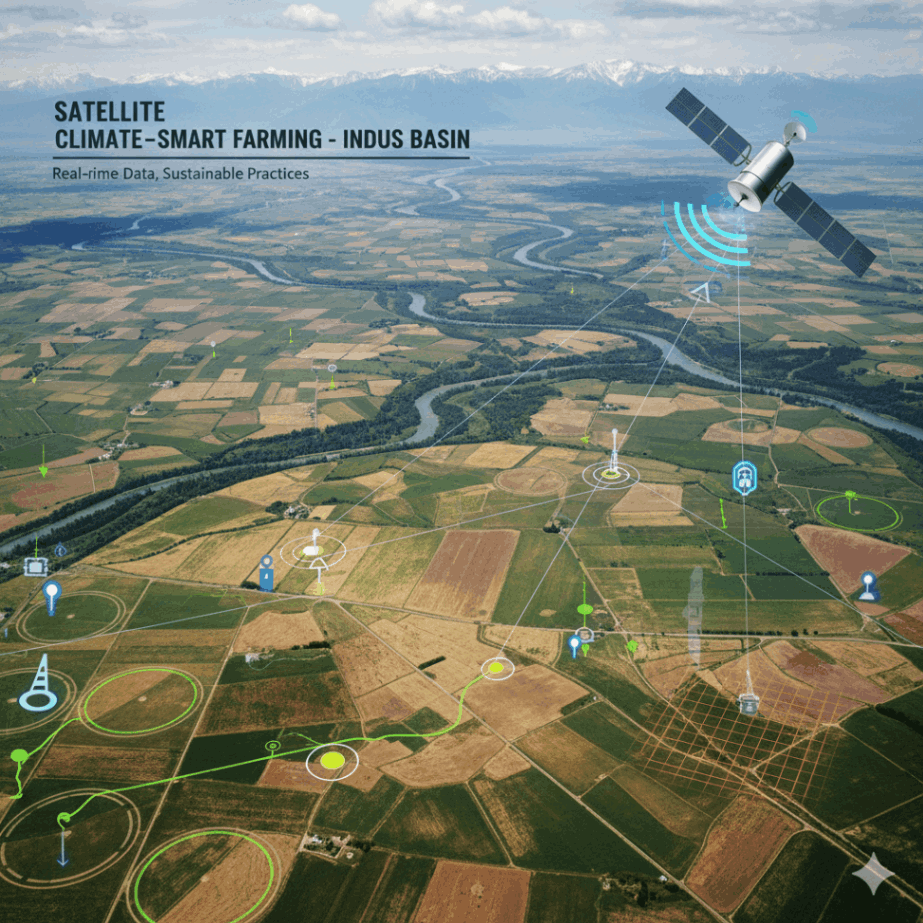
| 2. Carbon Measurement & Verification | Independent auditors verify emission reductions using satellite imagery, IoT sensors, and AI models. | Builds trust and ensures accurate carbon accounting. |
| 3. Tokenization on Blockchain | Verified credits are converted into digital tokens. | Farmers gain access to global carbon markets. |
| 4. Trading on Marketplaces | Tokens are sold to corporations aiming to offset emissions. | Farmers receive direct payments in digital or local currency. |
Case for Indus Basin Farmers
The Indus Basin’s climate challenges make it an ideal candidate for tokenized carbon credits:
-
Rice farmers can earn credits by reducing methane emissions through alternate wetting and drying (AWD) irrigation.
-
Cotton growers can adopt organic fertilizers and regenerative practices.
-
Fruit and vegetable farmers can increase soil carbon sequestration.
These efforts not only generate income but also improve resilience against climate change.
Benefits of Tokenized Carbon Credits in the Indus Basin
1. Financial Inclusion
Smallholder farmers gain access to global climate finance, bypassing traditional middlemen.
2. Climate Resilience
Adoption of sustainable practices helps farmers adapt to changing weather patterns.
3. Transparency & Trust
Blockchain-based tokens eliminate fraud, ensuring buyers know their credits are genuine.
4. New Revenue Stream
Farmers can diversify their income beyond crop sales, reducing vulnerability to market price fluctuations.
5. Government & NGO Support
International organizations can monitor and reward verified outcomes, enhancing policy effectiveness.
Challenges to Implementation
Despite the promise, certain barriers exist:
-
Awareness & Education: Farmers need training to understand blockchain and tokenized finance.
-
Verification Costs: Auditing emissions and soil carbon is resource-intensive.
-
Digital Access: Rural areas often lack internet and mobile coverage.
-
Market Volatility: Carbon prices fluctuate, creating uncertainty.
Policy & Institutional Role
Governments, NGOs, and fintech innovators must collaborate to make this model successful:
-
Subsidized Verification: Governments can fund satellite-based monitoring.
-
Digital Inclusion Programs: Expanding mobile connectivity in rural areas.
-
Carbon Market Regulation: Ensuring fair prices for farmers.
-
Fintech Platforms: Building user-friendly apps to connect farmers with buyers.
Example of Tokenization Platforms
Some global initiatives demonstrate how tokenized credits are being deployed:
-
Toucan Protocol Bringing carbon credits on-chain through blockchain.
-
Flowcarbon Tokenizing carbon offsets for global accessibility.
-
KlimaDAO Driving carbon liquidity in decentralized finance (DeFi).
For the Indus Basin, local fintech startups can adapt similar models, tailored to the region’s agricultural ecosystem.
Frequently Asked Questions (FAQ)
1. What are tokenized carbon credits?
They are digital assets representing verified carbon reductions, stored and traded on blockchain platforms.
2. How do Indus Basin farmers benefit?
They earn extra income by selling credits generated from sustainable farming practices.
3. What farming methods generate carbon credits?
Practices include regenerative agriculture, efficient irrigation, organic farming, and methane reduction in rice cultivation.
4. Are tokenized carbon credits secure?
Yes, blockchain ensures security, transparency, and traceability.
5. Who buys these credits?
Corporations, governments, and NGOs seeking to meet climate commitments purchase tokenized credits.
6. What challenges exist?
Challenges include verification costs, digital literacy, and fluctuating carbon prices.
Conclusion
Tokenized carbon credits offer a transformative opportunity for smallholder farmers in the Indus Basin. By merging blockchain, fintech, and sustainable agriculture, farmers can tap into global carbon markets, generate additional income, and strengthen climate resilience.
For this model to succeed, collaboration among governments, fintech innovators, NGOs, and international organizations is essential. If implemented effectively, tokenized carbon credits can empower rural communities while driving global efforts toward net-zero emissions.