Introduction
The race to achieve net-zero emissions has placed green hydrogen at the center of the global clean energy transition. Unlike fossil fuels, green hydrogen is produced using renewable sources such as solar, wind, and hydropower, making it a sustainable fuel alternative for industries that are difficult to decarbonize.
At the same time, the financing of green hydrogen projects has become a critical aspect of enabling widespread adoption. Governments, private investors, and international financial institutions are now channeling billions into hydrogen infrastructure, research, and production plants.
This article explores how green hydrogen and clean energy financing are reshaping the global energy market, the challenges ahead, and the strategies driving large-scale deployment.
What is Green Hydrogen?
Green hydrogen is hydrogen fuel created using electrolysis powered by renewable energy. It is considered the cleanest form of hydrogen because it produces no greenhouse gases during production.
Types of Hydrogen Production
| Type of Hydrogen | Production Method | Carbon Emissions |
|---|---|---|
| Green Hydrogen | Electrolysis using renewable energy (solar, wind, hydro) | Zero emissions |
| Blue Hydrogen | Natural gas + carbon capture technology | Low emissions |
| Grey Hydrogen | Natural gas without carbon capture | High emissions |
| Brown Hydrogen | Coal gasification | Very high emissions |
Green hydrogen stands out because it enables countries to decarbonize industries such as steel, cement, aviation, and shipping—sectors that cannot rely solely on electrification.
Why Financing Green Hydrogen Matters
Building a green hydrogen ecosystem requires massive capital investment. The costs of electrolyzers, renewable power infrastructure, storage, and transportation remain high. Without effective financing models, the technology cannot scale to meet global energy demands.
Key Financing Challenges
-
High upfront costs for electrolyzer technology and renewable power plants.
-
Uncertain demand in early markets, making investors cautious.
-
Policy risks, since subsidies and incentives vary across regions.
-
Lack of infrastructure, such as hydrogen pipelines and storage facilities.
Opportunities for Financiers
-
Investing in early-stage projects with government guarantees.
-
Exploring green bonds and sustainability-linked loans.
-
Partnering with multilateral development banks to share risks.
-
Capitalizing on long-term demand growth as hydrogen adoption accelerates.
Global Investments in Green Hydrogen
Several countries have made green hydrogen a pillar of their clean energy strategy. According to the International Energy Agency (IEA), global investments in hydrogen could surpass $500 billion by 2030.
Major Players in Hydrogen Financing
| Country/Region | Key Initiatives | Investment Value |
|---|---|---|
| European Union | Hydrogen Strategy 2050 | €470 billion by 2050 |
| United States | Inflation Reduction Act (IRA) tax credits | $9 billion+ in grants |
| Japan & South Korea | Hydrogen roadmaps for transport and industry | $40 billion+ combined |
| Middle East | Large-scale hydrogen production hubs | $20 billion+ in projects |
| Australia | Hydrogen export projects | $15 billion+ committed |
These investments highlight the global race to dominate hydrogen markets, both for domestic decarbonization and for export opportunities.
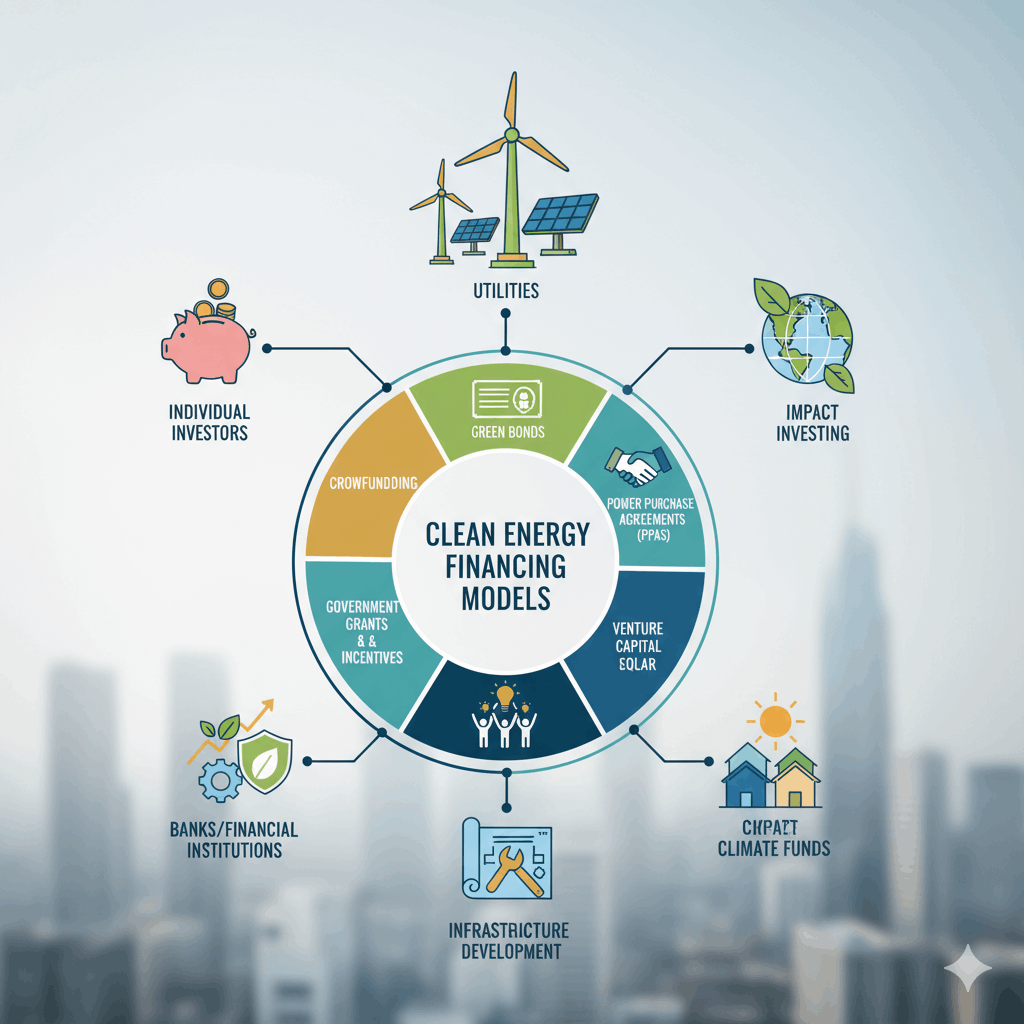
Financing Models for Green Hydrogen
To make green hydrogen economically viable, diverse financing models are emerging.
1. Public Financing
Governments offer subsidies, tax credits, and direct grants to stimulate green hydrogen adoption. For example, the EU’s Innovation Fund supports large-scale hydrogen projects.
2. Private Equity & Venture Capital
Private investors are entering the market through equity stakes in startups developing electrolyzers and hydrogen storage solutions.
3. Green Bonds & Sustainable Loans
Financial institutions issue green bonds to raise capital specifically for environmentally friendly projects, including hydrogen.
4. Public-Private Partnerships (PPPs)
Collaborations between governments and corporations reduce risks and accelerate infrastructure development.
5. Multilateral Development Banks
Organizations like the World Bank and the Asian Development Bank provide low-interest financing to support hydrogen projects in emerging markets.
Role of Technology in Reducing Financing Risks
Technological advancements are making hydrogen projects more bankable:
-
Electrolyzer efficiency improvements reduce production costs.
-
AI-powered energy management systems optimize renewable power for hydrogen plants.
-
Blockchain-based carbon tracking enhances transparency in clean energy financing.
For example, integrating digital finance tools like carbon credit marketplaces can attract investors seeking Environmental, Social, and Governance (ESG)-aligned opportunities.
Green Hydrogen in Emerging Markets
While Europe and the US lead in financing, emerging economies are critical players. Countries like India, Brazil, and South Africa are leveraging low-cost renewable energy to become future green hydrogen exporters.
Key advantages for emerging markets:
-
Abundant solar and wind resources for cheap hydrogen production.
-
Growing international partnerships for export deals.
-
Government-backed pilot programs to build domestic demand.
This positions them as strategic suppliers in the global energy value chain.
Future Outlook: Financing the Hydrogen Economy
The future of green hydrogen financing will likely be shaped by three major trends:
-
Scaling Production: As electrolyzer costs decline, economies of scale will attract private capital.
-
International Trade: Hydrogen exports will create new revenue streams for resource-rich countries.
-
Financial Innovation: Tokenized carbon credits, blockchain financing, and AI-driven investment platforms will support clean energy financing.
By 2050, green hydrogen could supply 20% of global energy needs, making it a trillion-dollar market opportunity.
Frequently Asked Questions (FAQ)
1. Why is green hydrogen important for the clean energy transition?
Green hydrogen enables decarbonization of hard-to-electrify industries like steel, cement, aviation, and shipping. It produces zero emissions when generated with renewable energy.
2. What are the main challenges in financing green hydrogen?
The main challenges include high upfront costs, uncertain demand, lack of infrastructure, and policy inconsistencies across countries.
3. How are governments supporting green hydrogen financing?
Governments are offering tax credits, subsidies, grants, and public-private partnerships to make green hydrogen projects more attractive to investors.
4. Which countries are leading in green hydrogen financing?
The European Union, United States, Japan, South Korea, Australia, and Middle Eastern countries are investing heavily in green hydrogen infrastructure.
5. What is the long-term financial outlook for green hydrogen?
By 2050, green hydrogen is expected to be a multi-trillion-dollar global industry, supported by international trade and advanced financing models.
Conclusion
Green hydrogen represents the future of sustainable energy, but its success depends on innovative financing solutions. Governments, private investors, and development banks must work together to scale production, build infrastructure, and reduce costs.
For stakeholders in clean energy, the financing of hydrogen projects is not just an environmental commitment but also a strategic financial opportunity in a trillion-dollar industry.