Introduction
Cross-border payments are the backbone of global trade and remittances, enabling businesses and individuals to transfer money across countries seamlessly. However, traditional systems have long been burdened by high fees, long settlement times, and fraud risks.
This is where Artificial Intelligence (AI) steps in. By automating fraud detection, optimizing compliance, and reducing operational costs, AI is transforming the future of cross-border payments. According to a report by McKinsey, the global payments industry could save billions annually by adopting AI-driven systems.
In this article, we will explore:
-
How AI reduces cross-border payment costs
-
The role of AI in preventing fraud
-
Real-world applications and case studies
-
Benefits for businesses, banks, and consumers
-
Future trends of AI in global transactions
For more insights on emerging fintech trends, check out our article on Blockchain for Global Supply Chain Finance.
Challenges in Cross-Border Payments
Before understanding how AI solves these issues, let’s identify the major challenges in international transactions:
-
High Transaction Costs Fees range between 5% to 10% per transfer.
-
Slow Settlement Times Payments can take 2 7 business days to clear.
-
Fraud and Money Laundering Risks Cross-border transactions are more vulnerable to cybercrime.
-
Complex Compliance Different countries have varied regulations, slowing down processes.
-
Limited Transparency Customers often lack visibility into fees and exchange rates.
-
Role of AI in Reducing Cross-Border Payment Costs
AI reduces transaction costs by automating processes and optimizing currency exchange.
1. Automated Currency Conversion
AI-powered algorithms analyze global markets to find the best real-time exchange rates, minimizing spreads and hidden fees.
2. Predictive Analytics for Liquidity
Financial institutions use AI to predict liquidity requirements, ensuring faster settlements with lower costs.
3. Smart Routing of Payments
AI systems identify the cheapest and fastest payment rails, bypassing costly intermediaries.
Cost Savings Comparison Table
| Feature | Traditional Payments | AI-Driven Payments |
|---|---|---|
| Transaction Fees | 5–10% | 1–3% |
| Settlement Time | 2–7 days | Seconds–Hours |
| Fraud Detection | Manual reviews | Real-time AI detection |
| Transparency | Limited | High with real-time data |
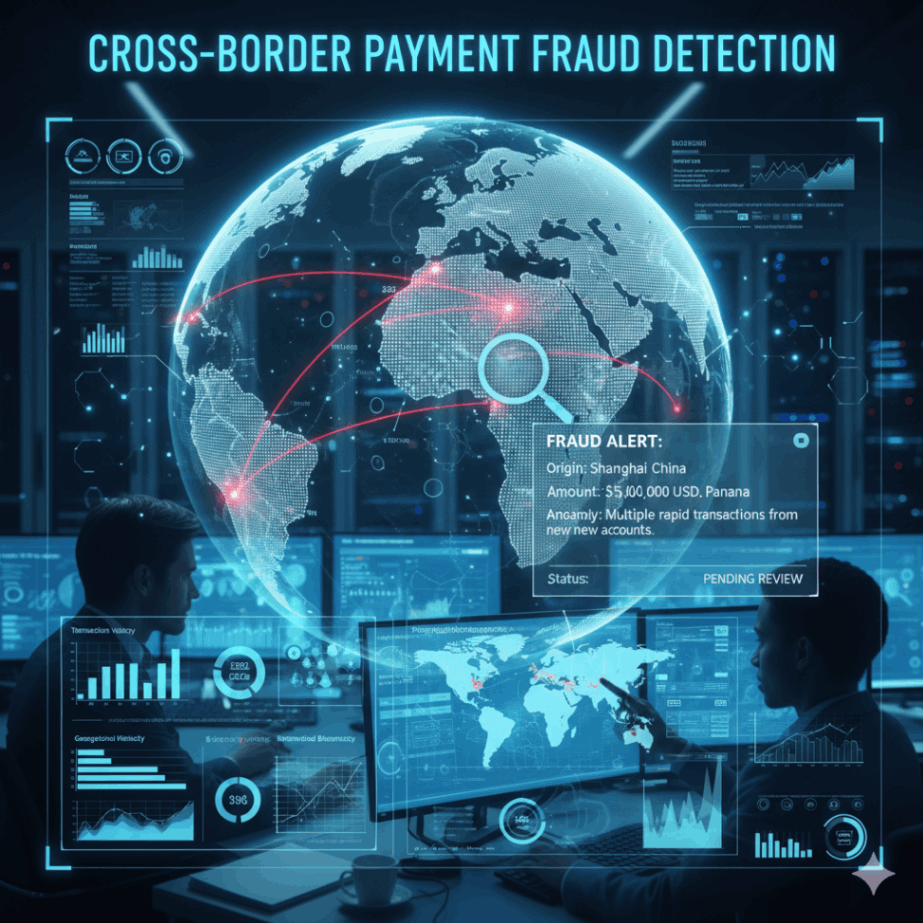
AI in Fraud Prevention for Cross-Border Payments
Fraud is a major concern in international transactions. AI strengthens fraud detection through:
-
Behavioral Analysis AI monitors unusual transaction patterns.
-
Machine Learning Models Detects anomalies in real-time to flag suspicious activities.
-
Biometric Verification Facial and voice recognition prevent identity theft.
-
AML & KYC Compliance AI automates customer due diligence, reducing human error.
According to PwC, AI can reduce payment fraud losses by up to 30% annually.
Case Studies: AI in Action
1. Mastercard
Mastercard uses AI-driven fraud detection to monitor 75 billion transactions annually, detecting fraud within milliseconds.
2. Ripple
Ripple integrates AI with blockchain to provide low-cost, real-time cross-border payments for banks and enterprises.
3. PayPal
PayPal applies machine learning models to reduce chargeback fraud, saving millions each year.
Benefits of AI in Cross-Border Payments
For Businesses:
-
Lower transfer fees
-
Faster payments to global suppliers
-
Increased trust with customers
For Banks & Financial Institutions:
-
Automated compliance reporting
-
Enhanced fraud detection
-
Cost-efficient operations
For Consumers:
-
Lower remittance fees
-
Real-time transfers
-
Safer and more transparent transactions
Future Trends of AI in Cross-Border Payments
The future of AI in payments looks promising with trends such as:
-
AI-Powered Digital Wallets for global transactions
-
Integration with CBDCs (Central Bank Digital Currencies)
-
AI + Blockchain hybrid systems for maximum transparency and security
-
Predictive Fraud Analytics to stay ahead of evolving cyber threats
For a deeper look into the future of digital money, explore our guide on the Global Impact of CBDCs.
FAQs
1. How does AI reduce cross-border payment costs?
AI automates transaction routing, improves exchange rate accuracy, and eliminates intermediaries, leading to lower costs.
2. Can AI completely prevent fraud in international payments?
While AI drastically reduces fraud, no system is 100% foolproof. AI provides real-time detection, making it harder for fraudulent transactions to succeed.
3. Is AI already being used in cross-border transactions?
Yes, companies like Mastercard, PayPal, and Ripple already leverage AI to improve payment security and efficiency.
4. How does AI improve compliance in cross-border payments?
AI automates KYC (Know Your Customer) and AML (Anti-Money Laundering) processes, reducing errors and speeding up compliance.
Conclusion
AI is transforming cross-border payments by reducing costs, accelerating transactions, and combating fraud. Businesses, banks, and consumers all benefit from this revolution, making international payments faster, safer, and more affordable.
As global commerce continues to expand, the adoption of AI-driven cross-border payment systems will no longer be optional it will be a necessity.
For more fintech innovations, visit FinTech Zoom IOM and stay updated with the latest in AI, blockchain, and global finance.