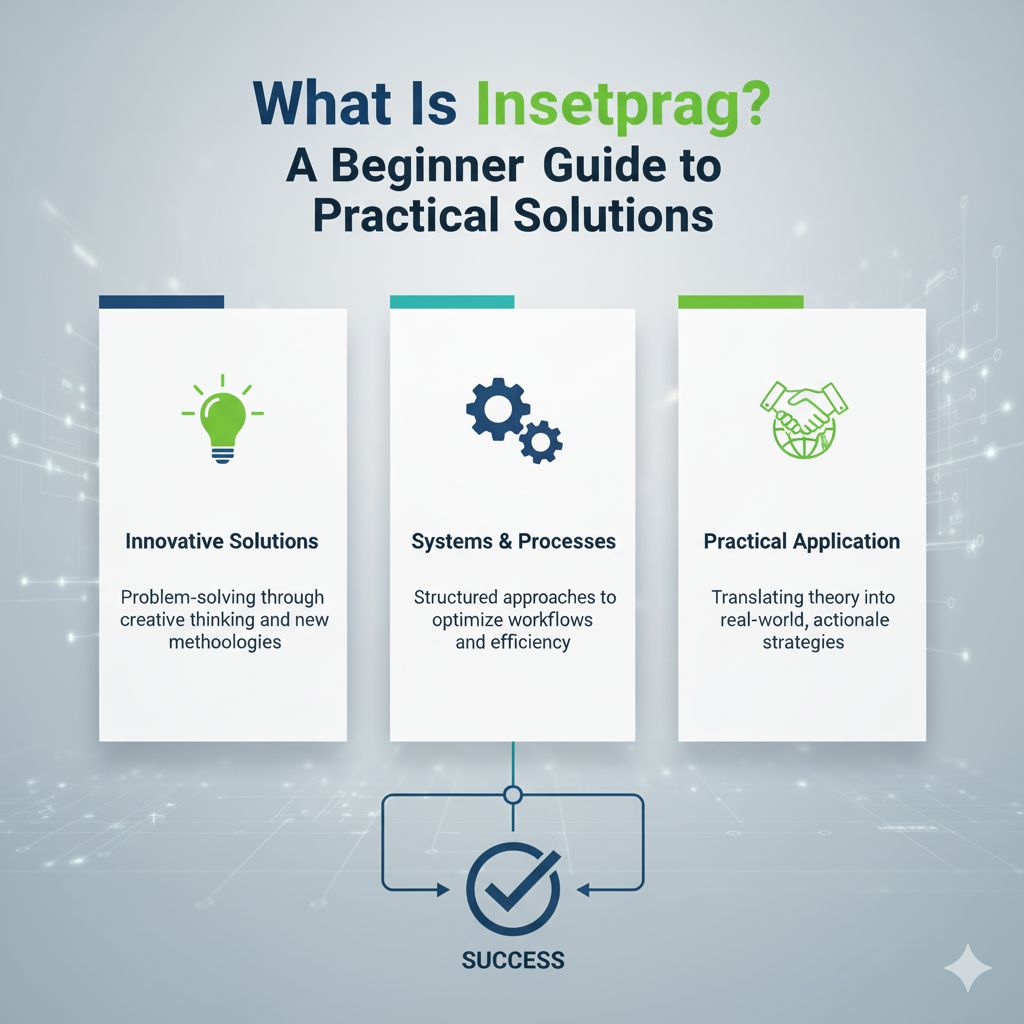
Welcome to your complete guide on Insetprag. You might have heard this term and wondered what it’s all about. In simple terms, Insetprag is an emerging methodology focused on integrating pragmatic, real-world solutions into complex systems, whether in technology, business strategy, or personal development. It’s about cutting through the noise to find what truly works and applying it effectively. This approach moves beyond purely theoretical models to emphasize practical application and measurable results.
This article will break down what insetprag means, where it came from, how it works, and why it’s becoming so important. We will explore its core principles, compare it to other methods, and give you practical steps to start using it yourself.
Key Takeaways
- What is Insetprag? It’s a practical framework for embedding actionable, realistic solutions into complex projects and systems.
- Core Principles: The method is built on principles of practicality, iterative progress, user-centric design, and data-driven decisions.
- Benefits: Adopting Insetprag can lead to increased efficiency, better resource management, reduced risk of failure, and higher user satisfaction.
- Applications: It can be applied across various fields, including software development, business management, marketing, and even personal productivity.
Understanding the Origins of Insetprag
The concept of insetprag didn’t appear overnight. It evolved from a growing need for more adaptable and realistic approaches in fast-paced industries. For decades, many fields relied on rigid, top-down methodologies. While these traditional models provided structure, they often struggled to adapt to rapid changes in technology, market demands, and user expectations. Consider large-scale projects that were planned for years, only to become obsolete by the time they launched.
This frustration gave rise to more flexible frameworks like Agile in software development. Insetprag builds upon these foundations. It takes the iterative nature of Agile and combines it with a strong emphasis on pragmatism—a focus on practical consequences and real-world value. It’s a direct response to theoretical perfectionism that can sometimes stall projects indefinitely. The goal is to make steady, tangible progress rather than waiting for a perfect, all-encompassing solution that may never arrive.
The Core Principles Driving Insetprag
To truly grasp the power of insetprag, it’s essential to understand the principles that guide it. These pillars ensure that the methodology remains grounded, effective, and adaptable to various challenges.
H3: A Focus on Practicality Over Theory
The most crucial principle is its commitment to what is practical. This means every decision, task, and goal is evaluated based on its real-world feasibility and impact. Instead of getting stuck in endless debates about the best theoretical approach, teams using insight ask, What is the most direct and effective step we can take right now? This mindset helps avoid analysis paralysis and keeps projects moving forward. It prioritizes actions that deliver tangible value to the end-user or business, even if they aren’t the most elegant or comprehensive solutions on paper.
H3: Iterative and Incremental Progress
Similar to Agile, Insetprag champions building and improving in small, manageable cycles. Instead of aiming for a single, massive launch, the process involves developing a minimum viable product (MVP) or initial version and then refining it based on feedback and data. This iterative loop reduces the risk of large-scale failure. It allows for continuous learning and adaptation, ensuring the final product is well-aligned with user needs and market realities. Each increment adds value, providing momentum and opportunities for course correction along the way.
H3: User-Centric Design and Feedback
At its heart, Insetprag is deeply user-centric. It recognizes that a solution is only successful if it works for the people who use it. This means involving users throughout the development process, not just at the end. Collecting feedback early and often is a critical part of the methodology. This could be through surveys, interviews, or usability testing. By placing the user at the center of every decision, teams can ensure they are building something that is not only functional but also genuinely useful and desirable.
How Insetprag Differs from Other Methodologies
It’s helpful to compare Insetprag to other popular frameworks to see its unique value. While it shares DNA with methods like Agile and Lean, its specific focus on grounded pragmatism sets it apart.
|
Feature |
Insetprag |
Agile |
Waterfall |
|---|---|---|---|
|
Core Focus |
Practical, real-world application |
Speed and flexibility |
Structured, sequential planning |
|
Planning Style |
Adaptive, based on tangible needs |
Iterative sprints |
Rigid, upfront, comprehensive plan |
|
Feedback Loop |
Continuous and user-driven |
Frequent (at the end of sprints) |
Limited (at the end of the project) |
|
Risk Management |
Mitigates risk through small, practical steps |
Manages risk through short cycles |
High risk due to late testing |
|
Best For |
Complex problems with uncertain solutions |
Projects with changing requirements |
Projects with fixed, precise requirements |
As the table shows, the key differentiator is the unwavering focus on what is practical and immediately applicable. While Agile is about adapting to change, a core tenet of insetprag is ensuring that every adaptation is firmly rooted in real-world constraints and opportunities.
The Benefits of Implementing an Insetprag Approach
Adopting an insight-driven mindset and framework can deliver significant advantages for teams and organizations. These benefits extend beyond just finishing a project; they impact efficiency, team morale, and the bottom line.
H4: Increased Efficiency and Faster Delivery
By prioritizing practical steps, teams avoid getting bogged down in unnecessary complexities. This focus allows for a more direct path to a functional outcome. Because progress is made in small, value-driven increments, teams can deliver working solutions to users much faster than with traditional models. This speed to market can be a significant competitive advantage, allowing an organization to respond quickly to new opportunities.
H4: Enhanced Resource Management
The insetprag methodology encourages a more innovative use of resources. By focusing on what is essential to deliver value, it helps eliminate wasted time, money, and effort on features or tasks that have little practical impact. The iterative nature also means that resources can be reallocated based on what is learned during the process, ensuring they are always directed toward the most critical areas of a project.
H4: Reduced Risk of Project Failure
Large, monolithic projects carry a high risk of failure. Requirements can change, budgets can be exceeded, and the final product might not meet user needs. The insetprag approach mitigates these risks by breaking down significant goals into small, manageable tasks. Constant feedback and testing ensure that the project stays on track. If a particular idea isn’t working, it becomes apparent early on, allowing the team to pivot without jeopardizing the entire project.
How to Get Started with Insetprag
Adopting Insetprag doesn’t require a massive organizational overhaul. You can start implementing its principles with your very next project. Here’s a simple, step-by-step guide.
- Define a Practical Goal: Start by identifying a clear, practical problem you want to solve. Avoid vague or overly ambitious goals. Ask: “What is the one thing we can achieve that will provide the most value right now?”
- Identify the Smallest First Step: Break down the goal into the smallest possible actions. What is your Minimum Viable Product (MVP)? This is the simplest version of your solution that still provides value to the user.
- Build, Measure, Learn: Execute that first small step. Then, immediately gather feedback and data. Did it work? What did you learn? Did it solve the user’s problem?
- Iterate Based on Feedback: Use what you learned to decide on the next practical step. Don’t plan too far ahead. Let the real-world feedback guide your next move. This cycle of building, measuring, and learning is the engine of the insight process.
- Maintain a Pragmatic Mindset: Throughout the process, constantly challenge assumptions. Ask yourself and your team: “Is this practical? Is this necessary? Is there a simpler way to achieve this?”
In-Practice in Action: A Case Study
Consider a small software company that wants to build a new project management tool. A traditional approach would involve months of planning, designing every possible feature, and then a long development cycle.
Using Insetprag, the team would start differently. They’d ask, What is the single most significant pain point for project managers?” After some research, they might find it’s tracking daily tasks. Their first goal isn’t to build a full-featured tool but to create a simple, web-based to-do list that allows users to add and check off tasks. This is their MVP.
They release this basic version to a small group of users. The feedback is positive, but users mention they need a way to set deadlines. So, for the next iteration, the team adds a due date feature. They continue this cycle, adding features like team collaboration and reporting, always guided by user feedback and practical needs. This method is a real-world example of how the Insetprag framework can deliver value. For more insights on modern business strategies, the fintechzoomiom.com Blog offers excellent articles on related topics.
Conclusion
The insetprag methodology is more than just another buzzword; it’s a fundamental shift in how we approach problem-solving. By prioritizing practicality, embracing iterative progress, and staying deeply connected to user needs, it offers a robust framework for navigating complexity and delivering real value. Whether you are developing software, creating a marketing campaign, or improving your own productivity, the principles of insight can help you cut through the noise and focus on what truly matters. Start small, be practical, and let real-world results guide your journey.
FAQ
Q1: Is Insetprag only for tech companies?
No, not at all. While its roots have ties to software development principles, Insetprag is a versatile methodology that can be applied to almost any field. Marketing teams can use it to test campaigns, businesses can use it for strategic planning, and individuals can use it for personal goals.
Q2: How is Insetprag different from just being practical?
While being practical is a key component, Insetprag is a structured methodology. It combines practicality with other principles, such as iterative cycles, user-centric feedback loops, and data measurement, to create a repeatable process for success. It’s about systemizing practicality.
Q3: Can I combine Insetprag with other methodologies like Scrum?
Absolutely. Insetprag is not mutually exclusive. It can complement frameworks like Scrum or Kanban very well. You can use Scrum for your team’s workflow management while applying an agile mindset to guide your product roadmap and feature prioritization, ensuring every sprint delivers practical value.